
Technology & Future
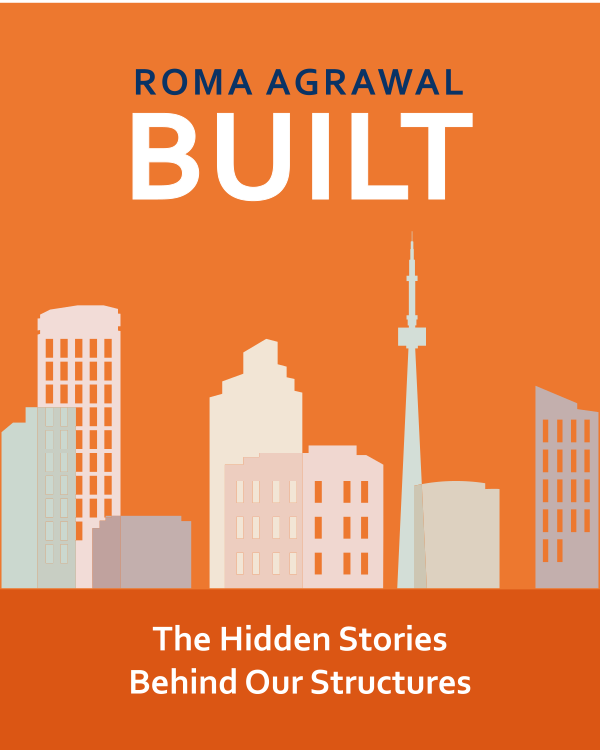
BuiltBuilt
Built

Built

user-icon

Roma Agrawal

The marvels of contemporary architecture represent the pinnacle of millennia-long building expertise. By delving into this extensive history, one can develop a deeper appreciation for the structures in existence. The work of an engineer involves a variety of tasks, from assessing the forces of nature on a building to analyzing the foundation on which it stands. Far from mundane, an engineer's role is complex and multifaceted. Looking forward, the prospect of unforeseen technologies suggests that the field will continue to evolve and become even more exhilarating for future engineers.

hashtagpopular-science
hashtagdesign
hashtagengineering
hashtagarchitecture
clock22 min
bite12 Bite
target Insight

What's it about?

In Built (2018), Agrawal sheds light on the often-overlooked heroes of construction: structural engineers. Regrettably, structural engineering typically grabs headlines only in the aftermath of disasters, like a bridge collapse or building failure. Agrawal's narrative in Built provides a more comprehensive understanding of the engineer's role, presenting various stories and intriguing details about the structures shaping our world and the individuals behind their creation.

Book summary

A renowned structural engineer, Roma Agrawal has been involved in the design of bridges, many skyscrapers and sculptures. He contributed to the construction of The Shard in London, the tallest building in Western Europe. He has lectured extensively and has presented television programs for the BBC and Discovery.

The marvels of contemporary architecture represent the pinnacle of millennia-long building expertise. By delving into this extensive history, one can develop a deeper appreciation for the structures in existence. The work of an engineer involves a variety of tasks, from assessing the forces of nature on a building to analyzing the foundation on which it stands. Far from mundane, an engineer's role is complex and multifaceted. Looking forward, the prospect of unforeseen technologies suggests that the field will continue to evolve and become even more exhilarating for future engineers.

To read rest of the book, you can download Bitely
appstoregoogleplayapp gallery
All Bites
bite12 Bites

An engineer's primary responsibility is to construct structures that can withstand the impact of natural disasters.

1
logo

The components utilized in contemporary construction closely resemble those employed in ancient times.

2
logo

Structural engineers have to consider various natural forces like wind and earthquakes.

3
logo

Natural disasters provide valuable lessons for enhancing building practices.

4
logo

The history of materials in modern structural engineering spans a considerable period.

5
logo

Concrete turns out to be more intriguing than it seems.

6
logo

Modern buildings reach unprecedented heights.

7
logo

The destiny of a structure is linked to the ground it stands upon.

8
logo

Innovative construction methods can aid in supplying water to arid regions.

9
logo

Human excrement is a record of civilization.

10
logo

Several pioneering women have challenged gender inequality in the engineering field.

11
logo

The future of structural engineering is promising.

12
logo

Related Books

mailbox-icon

Want to keep learning?

Big ideas, bite-sized lessons—feed your curiosity every day with Bitely!