
Nature & Science
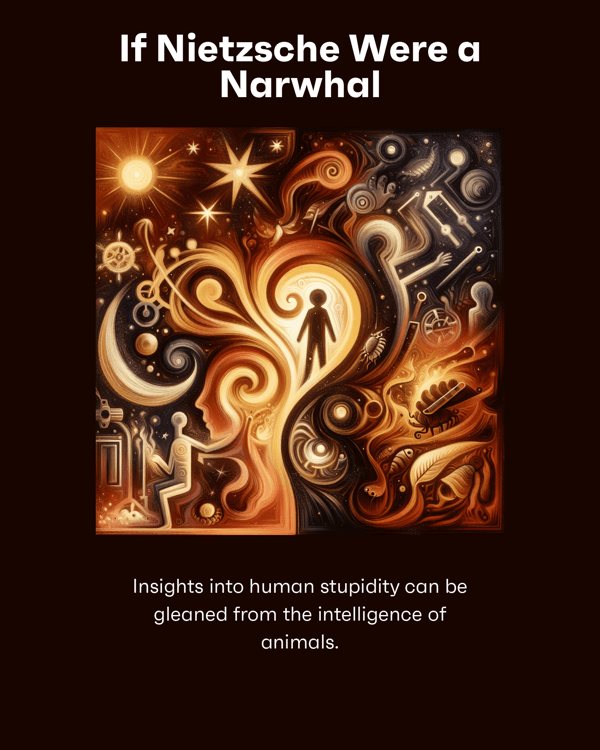
If Nietzsche Were a NarwhalIf Nietzsche Were a Narwhal

If Nietzsche Were a Narwhal

user-icon

Justin Gregg

Humans are uniquely driven by “why” questions, a trait that has fueled progress in fields like science, art, and philosophy but also led to self-destructive tendencies. From early religious symbolism to peculiar remedies like applying chicken butts to snakebites, our curiosity has shaped history. Yet, this cognitive leap has also burdened us with existential crises, harmful ideologies, and the accumulation of useless information. Traits like lying and bullshitting, while ethically complex, have become evolutionary tools, valued for their persuasive power. The struggle against bedbugs exemplifies humanity’s shortsightedness, or "prognostic myopia," as efforts to eradicate them with DDT not only failed but caused widespread environmental and health damage. This pattern of ignoring long-term consequences, evident in issues like pollution and climate change, underscores a critical flaw in human intelligence that continues to threaten our survival.

clock5 min
bite3 Bite
target Wgląd

O czym to jest?

Humans are uniquely driven by the need to ask "why," a trait that has fueled remarkable advancements in science, art, and philosophy but also led to self-destructive tendencies. This book explores the paradox of human curiosity, from its role in shaping history and innovation to its darker consequences, such as harmful ideologies and environmental damage. Through vivid examples—ranging from ancient remedies to the resilience of bedbugs—it examines how our relentless pursuit of answers often blinds us to long-term consequences. With wit and depth, it delves into the complexities of human intelligence, questioning whether our greatest strength might also be our greatest flaw.

Streszczenie książki

Justin Gregg is an adjunct professor at St. Francis Xavier University in Nova Scotia, Canada. He’s also a senior research associate who specializes in animal behavior and cognition.

Humans are uniquely driven by “why” questions, a trait that has fueled progress in fields like science, art, and philosophy but also led to self-destructive tendencies. From early religious symbolism to peculiar remedies like applying chicken butts to snakebites, our curiosity has shaped history. Yet, this cognitive leap has also burdened us with existential crises, harmful ideologies, and the accumulation of useless information. Traits like lying and bullshitting, while ethically complex, have become evolutionary tools, valued for their persuasive power. The struggle against bedbugs exemplifies humanity’s shortsightedness, or "prognostic myopia," as efforts to eradicate them with DDT not only failed but caused widespread environmental and health damage. This pattern of ignoring long-term consequences, evident in issues like pollution and climate change, underscores a critical flaw in human intelligence that continues to threaten our survival.

Aby przeczytać resztę książki, możesz pobrać Bitely
appstoregoogleplayapp gallery
Wszystkie kęsy
bite3 Bites

The Burden of Asking Why

1
logo

The Perils and Power of Asking Why

2
logo

Bedbugs, DDT, and Humanity’s Blind Spots

3
logo

Powiązane książki

mailbox-icon

Chcesz kontynuować naukę?

Nie przegap aktualizacji z ekscytującego wszechświata Bitely!

Logo
appstoregoogleplay
app gallery

Śledź nas w mediach społecznościowych

tiktokxinstagramyoutubelinkedinfacebook
© 2025 Bitely. Wszelkie prawa zastrzeżone.