Nature & Science
ExtraterrestrialExtraterrestrial

Extraterrestrial

user-icon

Avi Loeb

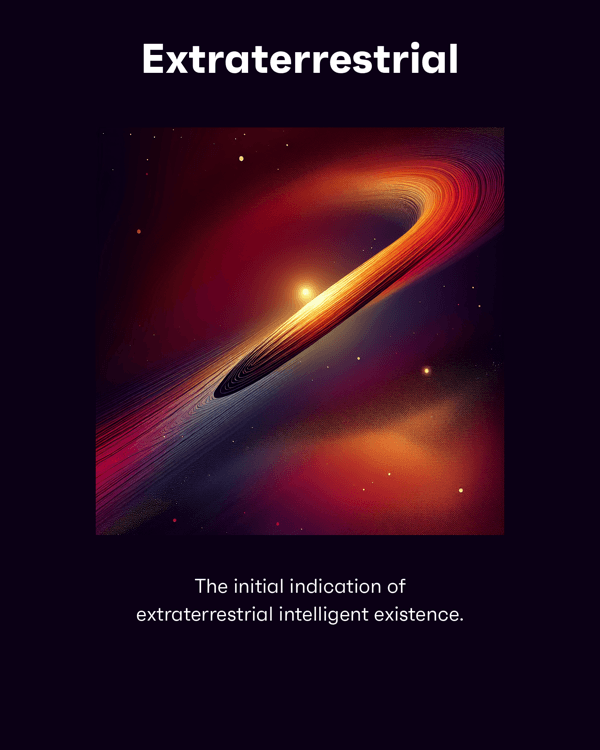
Astronomer Robert Weryk’s discovery of 'Oumuamua, the first known interstellar object, marked a groundbreaking moment in humanity’s understanding of the cosmos. Unlike any asteroid or comet previously observed, 'Oumuamua’s peculiar shape, hyperbolic trajectory, and unexplained acceleration defied conventional classification, sparking debates about its origins. While some scientists proposed natural explanations, others, like Avi Loeb, suggested it might be an artificial construct, possibly a lightsail or alien technology. This enigmatic visitor challenges us to expand our search for extraterrestrial life beyond Earth-like conditions, considering not only active ecosystems but also remnants of advanced civilizations. Despite skepticism within the scientific community, 'Oumuamua underscores the importance of open-minded inquiry and humanity’s potential to achieve interstellar exploration. Its mysteries remind us of the vast possibilities the universe holds and the need to embrace bold, imaginative thinking as we continue to explore our place within it.

clock18 min
bite7 Bite
target Wgląd

O czym to jest?

This book delves into the extraordinary discovery of 'Oumuamua, the first known interstellar object to pass through our solar system, and the profound questions it raises about life beyond Earth. Blending cutting-edge science with bold speculation, it explores the mysteries of 'Oumuamua’s origin, its peculiar behavior, and its potential implications for humanity’s future. Through a captivating narrative, readers are invited to consider the possibilities of alien technology, interstellar exploration, and the broader search for extraterrestrial life. It’s a thought-provoking journey that challenges our understanding of the universe and our place within it.

Streszczenie książki

Avi Loeb is the Frank B. Baird, Jr., Professor of Science at Harvard University, chair of Harvard’s Department of Astronomy, and chair of the Board on Physics and Astronomy of the National Academies. He has authored more than 700 scientific papers on space, astronomy, and astrophysics.

Astronomer Robert Weryk’s discovery of 'Oumuamua, the first known interstellar object, marked a groundbreaking moment in humanity’s understanding of the cosmos. Unlike any asteroid or comet previously observed, 'Oumuamua’s peculiar shape, hyperbolic trajectory, and unexplained acceleration defied conventional classification, sparking debates about its origins. While some scientists proposed natural explanations, others, like Avi Loeb, suggested it might be an artificial construct, possibly a lightsail or alien technology. This enigmatic visitor challenges us to expand our search for extraterrestrial life beyond Earth-like conditions, considering not only active ecosystems but also remnants of advanced civilizations. Despite skepticism within the scientific community, 'Oumuamua underscores the importance of open-minded inquiry and humanity’s potential to achieve interstellar exploration. Its mysteries remind us of the vast possibilities the universe holds and the need to embrace bold, imaginative thinking as we continue to explore our place within it.

Aby przeczytać resztę książki, możesz pobrać Bitely

appstoregoogleplayapp gallery
Wszystkie kęsy
bite7 Bites

Unveiling 'Oumuamua: The First Interstellar Mystery

1
logo

Decoding 'Oumuamua: The Mystery of an Interstellar Visitor

2
logo

Decoding 'Oumuamua: A Cosmic Mystery Unveiled

3
logo

Decoding 'Oumuamua: Rethinking Alien Possibilities

4
logo

Decoding 'Oumuamua: Clues to Alien Life

5
logo

Expanding Horizons: The Search for Alien Traces

6
logo

Unlocking Cosmic Mysteries Through 'Oumuamua’s Lesson

7
logo

Powiązane książki

mailbox-icon

Chcesz kontynuować naukę?

Nie przegap aktualizacji z ekscytującego wszechświata Bitely!

Logo
appstoregoogleplay
app gallery

Śledź nas w mediach społecznościowych

tiktokxinstagramyoutubelinkedinfacebook
© 2025 Bitely. Wszelkie prawa zastrzeżone.