Nature & Science
CookedCooked

Cooked

user-icon

Michael Pollan

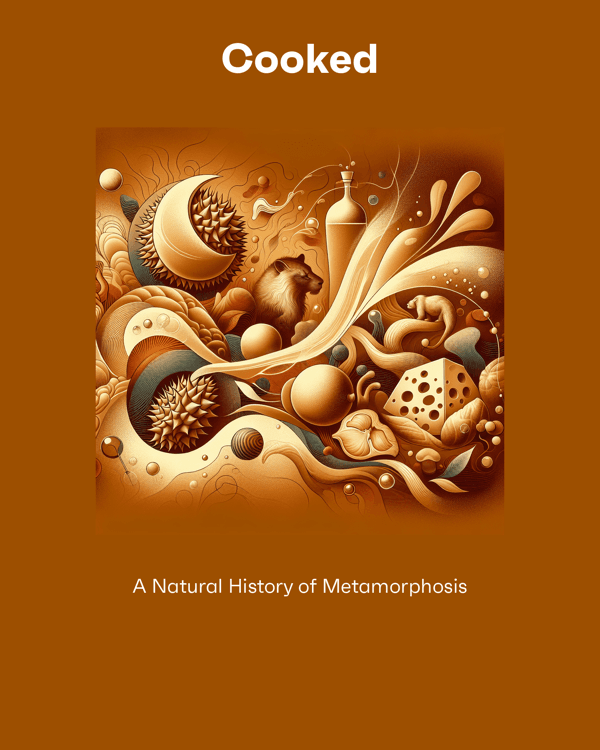
When durian fruit falls and ferments, it attracts animals like tigers, wild pigs, and rhinos, drawn to the natural alcohol produced. Alcohol, a coveted fermented substance, fascinates both humans and animals, with some species, like Chinese monkeys and Malaysian pen-tailed tree shrews, creating or consuming it naturally. Chimps drink excessively when given the chance, while rats mimic human habits, enjoying small pre- and post-meal drinks and occasionally indulging in heavy social drinking. Cultural exposure shapes preferences for fermented foods, as seen with kimchi, pickled shark, or Camembert cheese, which puzzled American soldiers during World War II. Cooking, a transformative process, made food more digestible, nutritious, and safe, enabling humans to thrive without the large jaws and digestive systems of their ancestors. Microbes, essential for fermentation and digestion, contribute to foods like bread, beer, and cheese, though modern sterilization and antibiotic overuse diminish their benefits. Fermented foods, like Captain Cook’s sauerkraut, have long been valued for health benefits, while white bread, once a luxury, became nutritionally inferior with industrial processing, leading to health issues addressed through fortification. Post-WWII, processed foods gained popularity for convenience but contributed to unhealthy diets, unlike home cooking, which correlates with lower obesity rates. Bread, central to human history, evolved from early flatbreads to leavened loaves, unlocking nutrients and offering efficient energy storage, while plant-based diets proved more sustainable than animal-based ones. Bacon’s widespread appeal lies in umami, the fifth taste discovered by Japanese chemist Kikunae Ikeda in 1908, later confirmed by U.S. scientists in 2001, with glutamate, inosine, and guanosine enhancing its savory flavor in dishes worldwide.

clock12 min
bite7 Bite
target Wgląd

O czym to jest?

This book delves into the fascinating relationship between food, culture, and biology, exploring how fermentation, cooking, and dietary habits have shaped human evolution and society. From the natural alcohol enjoyed by animals to the invention of leavened bread in ancient Egypt, it uncovers the science and history behind our most cherished foods. With engaging insights into microbial life, the rise of processed foods, and the discovery of umami, it offers a thought-provoking journey through the culinary and cultural forces that define us. Perfect for curious minds, it reveals how what we eat connects us to nature, history, and each other.

Streszczenie książki

Michael Pollan is a food journalist, bestselling author and a professor of journalism at the University of California at Berkeley. His other books include The Omnivore’s Dilemma and In Defense of Food.

When durian fruit falls and ferments, it attracts animals like tigers, wild pigs, and rhinos, drawn to the natural alcohol produced. Alcohol, a coveted fermented substance, fascinates both humans and animals, with some species, like Chinese monkeys and Malaysian pen-tailed tree shrews, creating or consuming it naturally. Chimps drink excessively when given the chance, while rats mimic human habits, enjoying small pre- and post-meal drinks and occasionally indulging in heavy social drinking. Cultural exposure shapes preferences for fermented foods, as seen with kimchi, pickled shark, or Camembert cheese, which puzzled American soldiers during World War II. Cooking, a transformative process, made food more digestible, nutritious, and safe, enabling humans to thrive without the large jaws and digestive systems of their ancestors. Microbes, essential for fermentation and digestion, contribute to foods like bread, beer, and cheese, though modern sterilization and antibiotic overuse diminish their benefits. Fermented foods, like Captain Cook’s sauerkraut, have long been valued for health benefits, while white bread, once a luxury, became nutritionally inferior with industrial processing, leading to health issues addressed through fortification. Post-WWII, processed foods gained popularity for convenience but contributed to unhealthy diets, unlike home cooking, which correlates with lower obesity rates. Bread, central to human history, evolved from early flatbreads to leavened loaves, unlocking nutrients and offering efficient energy storage, while plant-based diets proved more sustainable than animal-based ones. Bacon’s widespread appeal lies in umami, the fifth taste discovered by Japanese chemist Kikunae Ikeda in 1908, later confirmed by U.S. scientists in 2001, with glutamate, inosine, and guanosine enhancing its savory flavor in dishes worldwide.

Aby przeczytać resztę książki, możesz pobrać Bitely

appstoregoogleplayapp gallery
Wszystkie kęsy
bite7 Bites

The Essential Role of Cooking in Human Evolution

1
logo

The Science Behind Umami: A Savory Revelation

2
logo

How Processed Foods Reshaped American Eating Habits

3
logo

The Rise and Legacy of Leavened Bread

4
logo

White Bread’s Rise and Nutritional Cost

5
logo

Microbial Marvels: The Hidden Power of Fermentation

6
logo

Fermentation: Nature’s Unexpected Bond Between Species

7
logo

Powiązane książki

mailbox-icon

Chcesz kontynuować naukę?

Nie przegap aktualizacji z ekscytującego wszechświata Bitely!

Logo
appstoregoogleplay
app gallery

Śledź nas w mediach społecznościowych

tiktokxinstagramyoutubelinkedinfacebook
© 2025 Bitely. Wszelkie prawa zastrzeżone.