Biography & History
WaldenWalden

Walden

user-icon

Henry David Thoreau

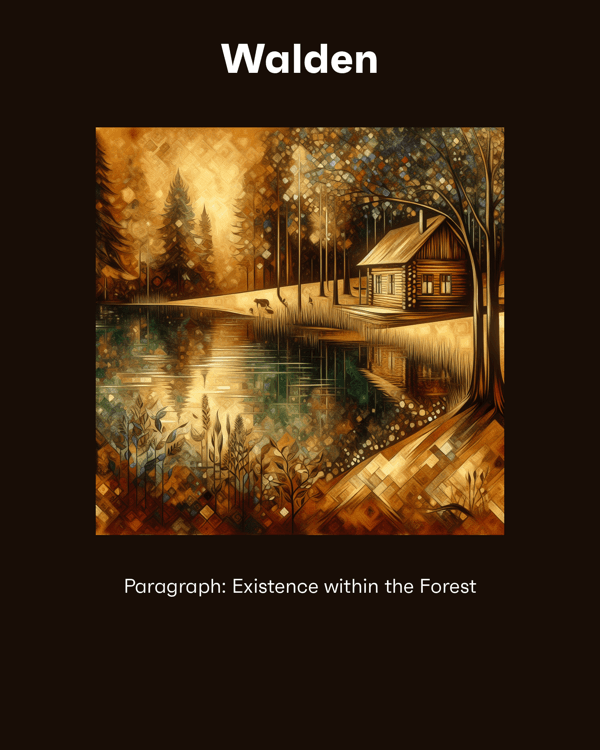
In 1845, Henry David Thoreau retreated to the woods near Walden Pond in Concord, Massachusetts, seeking refuge from the burdens of modern life, which he believed stifled wisdom and freedom. Rejecting society’s obsession with materialism and relentless labor, he embraced simplicity, intellectual growth, and self-reliance. Thoreau admired the practical ingenuity of Native American dwellings and saw building one’s own home and growing food as deeply enriching experiences. At Walden, he immersed himself in nature, finding joy in the changing seasons, the arrival of spring, and the companionship of woodland creatures. Though not a recluse, he valued solitude as a means to reflect on life’s deeper truths, rejecting the distractions of material wealth in favor of spiritual and intellectual fulfillment. His two-year experiment demonstrated that a deliberate, minimalist life in harmony with nature fosters clarity, independence, and profound contentment.

clock11 min
bite9 Bite
target Wgląd

O czym to jest?

Henry David Thoreau’s time at Walden Pond was a bold experiment in simplicity, self-reliance, and living deliberately. Troubled by the materialism and relentless pace of modern life, he sought refuge in nature to explore deeper truths and rediscover life’s essence. Through his reflections on solitude, the cycles of nature, and the wisdom found in simplicity, Thoreau challenges readers to reconsider their priorities and the meaning of fulfillment. His journey at Walden offers timeless insights into the balance between society, individuality, and the natural world.

Streszczenie książki

Henry David Thoreau (1817-1862) was an avid essayist, poet and philosopher. Thoreau spent much of his life exploring the relationship people have with nature, work and government. He is considered one of the leaders of the transcendentalist movement in nineteenth-century America.

In 1845, Henry David Thoreau retreated to the woods near Walden Pond in Concord, Massachusetts, seeking refuge from the burdens of modern life, which he believed stifled wisdom and freedom. Rejecting society’s obsession with materialism and relentless labor, he embraced simplicity, intellectual growth, and self-reliance. Thoreau admired the practical ingenuity of Native American dwellings and saw building one’s own home and growing food as deeply enriching experiences. At Walden, he immersed himself in nature, finding joy in the changing seasons, the arrival of spring, and the companionship of woodland creatures. Though not a recluse, he valued solitude as a means to reflect on life’s deeper truths, rejecting the distractions of material wealth in favor of spiritual and intellectual fulfillment. His two-year experiment demonstrated that a deliberate, minimalist life in harmony with nature fosters clarity, independence, and profound contentment.

Aby przeczytać resztę książki, możesz pobrać Bitely

appstoregoogleplayapp gallery
Wszystkie kęsy
bite9 Bites

Living Deliberately: Thoreau’s Quest for Freedom

1
logo

Living Deliberately: Escaping Society’s Burdens

2
logo

Building Wisdom: Thoreau’s Call for Simple Living

3
logo

Living in Harmony: Thoreau’s Walden Experiment

4
logo

Walden’s Open Door: Conversations Under the Trees

5
logo

Wild Companions: Life Among Walden's Creatures

6
logo

Surviving Winter: Thoreau’s Resilient Walden Life

7
logo

Awakening with Spring at Walden Pond

8
logo

Living Deliberately: Thoreau’s Pursuit of Truth

9
logo

Powiązane książki

mailbox-icon

Chcesz kontynuować naukę?

Nie przegap aktualizacji z ekscytującego wszechświata Bitely!

Logo
appstoregoogleplay
app gallery

Śledź nas w mediach społecznościowych

tiktokxinstagramyoutubelinkedinfacebook
© 2025 Bitely. Wszelkie prawa zastrzeżone.