Self-Growth
Theories of ChildhoodTheories of Childhood

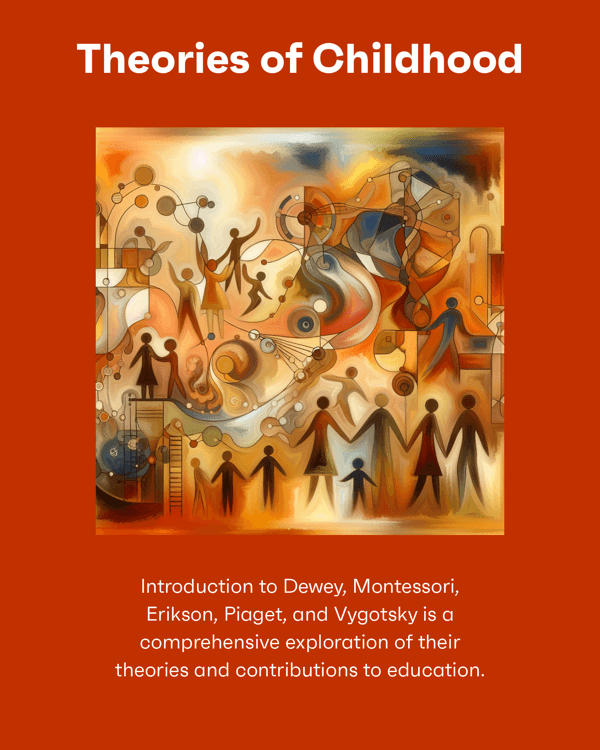
Theories of Childhood

user-icon

Carol Garhart Mooney

Lev Vygotsky, a Russian scholar born in 1896, transitioned from teaching literature to pioneering psychology and educational theory, inspired by figures like Freud, Piaget, and Montessori. His research revealed that children at the same developmental stage could learn in vastly different ways, with some thriving independently and others needing support. Rejecting reliance on intelligence tests, Vygotsky advocated for a holistic approach combining observations and assessments, emphasizing the profound impact of culture, environment, and social interactions on learning. He championed play as a critical arena for cognitive and language development, where children actively construct knowledge through dynamic exchanges. His groundbreaking concept of the Zone of Proximal Development (ZPD) defined the gap between independent achievement and what is possible with guidance, introducing "scaffolding" as a method for educators to provide tailored support. Encouraging teachers to use their observations and broader knowledge to enrich children’s learning, Vygotsky’s emphasis on social interaction and scaffolded learning remains a cornerstone of modern education.

clock9 min
bite5 Bite
target Wgląd

O czym to jest?

Lev Vygotsky was a pioneering Russian psychologist whose groundbreaking ideas transformed our understanding of how children learn. Fascinated by the interplay between cognitive and language development, he introduced innovative concepts like the Zone of Proximal Development (ZPD) and scaffolding, which emphasize the importance of guided support in mastering new skills. Vygotsky’s work highlighted the profound influence of social interactions, culture, and environment on a child’s learning process, with play serving as a critical space for cognitive and linguistic growth. Though his life was tragically brief, his theories remain a cornerstone of modern education, inspiring practices that prioritize observation, collaboration, and dynamic learning.

Streszczenie książki

Carol Garhart Mooney is an educator and author on childhood development with decades of classroom experience. Her books include Theories of Attachment, Use Your Words, and Swinging Pendulums.

Lev Vygotsky, a Russian scholar born in 1896, transitioned from teaching literature to pioneering psychology and educational theory, inspired by figures like Freud, Piaget, and Montessori. His research revealed that children at the same developmental stage could learn in vastly different ways, with some thriving independently and others needing support. Rejecting reliance on intelligence tests, Vygotsky advocated for a holistic approach combining observations and assessments, emphasizing the profound impact of culture, environment, and social interactions on learning. He championed play as a critical arena for cognitive and language development, where children actively construct knowledge through dynamic exchanges. His groundbreaking concept of the Zone of Proximal Development (ZPD) defined the gap between independent achievement and what is possible with guidance, introducing "scaffolding" as a method for educators to provide tailored support. Encouraging teachers to use their observations and broader knowledge to enrich children’s learning, Vygotsky’s emphasis on social interaction and scaffolded learning remains a cornerstone of modern education.

Aby przeczytać resztę książki, możesz pobrać Bitely

appstoregoogleplayapp gallery
Wszystkie kęsy
bite5 Bites

John Dewey: Revolutionizing Education Through Innovation

1
logo

Breaking Barriers: Maria Montessori's Revolutionary Methods

2
logo

Building Trust: Erik Erikson's Developmental Insights

3
logo

Shaping Minds Through Active Discovery

4
logo

Shaping Minds Through Social Learning

5
logo

Powiązane książki

mailbox-icon

Chcesz kontynuować naukę?

Nie przegap aktualizacji z ekscytującego wszechświata Bitely!

Logo
appstoregoogleplay
app gallery

Śledź nas w mediach społecznościowych

tiktokxinstagramyoutubelinkedinfacebook
© 2025 Bitely. Wszelkie prawa zastrzeżone.