Technology & Future
Stop Reading the NewsStop Reading the News

Stop Reading the News

user-icon

Rolf Dobelli

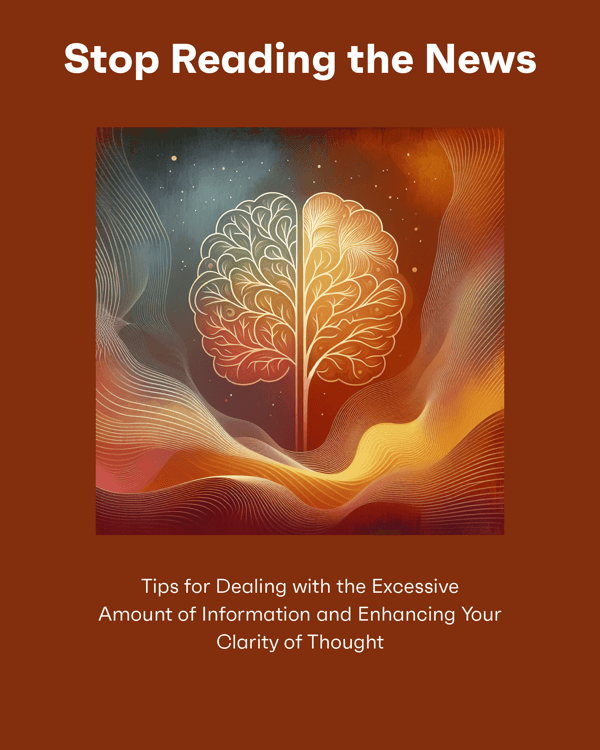
The human brain’s adaptability allows it to reshape itself based on habits, as seen in London taxi drivers who develop larger hippocampi by memorizing city maps. Similarly, frequent news consumption rewires the brain, prioritizing multitasking and rapid information processing at the expense of sustained attention and moral reasoning. Studies reveal that overexposure to media diminishes brain cells in areas critical for focus and ethical reflection, fostering shallow thinking and reducing the capacity for deep analysis. This habit trains the brain to fixate on trivial matters, leaving lasting impacts on attention and thoughtful reflection. Moreover, most news stories, focused on novelty rather than relevance, fade quickly from memory, offering little enduring significance. Since its inception, the news industry has prioritized sensationalism to capture attention, a practice amplified by today’s click-driven, smartphone-enabled media landscape. This constant stream of updates distracts from meaningful pursuits, diluting focus and preventing mastery in one’s field. History’s great achievers succeeded by dedicating themselves fully to their craft, unburdened by the distractions of news. While stepping away from news may raise concerns about staying informed or participating in democracy, history shows that deep thinking and meaningful discourse—not an endless flood of updates—are the foundations of an engaged and informed society. Supporting in-depth journalism over superficial news ensures accountability and a richer understanding of the world, allowing democracy to thrive without constant news consumption.

clock16 min
bite8 Bite
target Wgląd

O czym to jest?

This book challenges the way we consume news, revealing its hidden costs on our mental well-being, focus, and understanding of the world. Through compelling research and personal insights, it explores how constant exposure to fleeting headlines rewires our brains, fosters shallow thinking, and distracts us from meaningful pursuits. By stepping away from the relentless news cycle, the author advocates for deeper engagement with the world through thoughtful reflection, specialized knowledge, and quality journalism. It’s a call to reclaim your time, attention, and purpose in an age of information overload.

Streszczenie książki

Rolf Dobelli is an author and businessman who was born in Lucerne, Switzerland, in 1966. He began his writing career in 2003 as a novelist, with the publication of Fünfunddreissig, but is best known for his nonfictional work, The Art of Thinking Clearly. In 1999, he co-founded getAbstract, a publisher of book summaries and article abstracts.

The human brain’s adaptability allows it to reshape itself based on habits, as seen in London taxi drivers who develop larger hippocampi by memorizing city maps. Similarly, frequent news consumption rewires the brain, prioritizing multitasking and rapid information processing at the expense of sustained attention and moral reasoning. Studies reveal that overexposure to media diminishes brain cells in areas critical for focus and ethical reflection, fostering shallow thinking and reducing the capacity for deep analysis. This habit trains the brain to fixate on trivial matters, leaving lasting impacts on attention and thoughtful reflection. Moreover, most news stories, focused on novelty rather than relevance, fade quickly from memory, offering little enduring significance. Since its inception, the news industry has prioritized sensationalism to capture attention, a practice amplified by today’s click-driven, smartphone-enabled media landscape. This constant stream of updates distracts from meaningful pursuits, diluting focus and preventing mastery in one’s field. History’s great achievers succeeded by dedicating themselves fully to their craft, unburdened by the distractions of news. While stepping away from news may raise concerns about staying informed or participating in democracy, history shows that deep thinking and meaningful discourse—not an endless flood of updates—are the foundations of an engaged and informed society. Supporting in-depth journalism over superficial news ensures accountability and a richer understanding of the world, allowing democracy to thrive without constant news consumption.

Aby przeczytać resztę książki, możesz pobrać Bitely

appstoregoogleplayapp gallery
Wszystkie kęsy
bite8 Bites

Breaking Free from the News Obsession

1
logo

Breaking Free from the News Trap

2
logo

How News Consumption Rewires Your Brain

3
logo

Breaking Free from the Grip of Negative News

4
logo

Breaking Free from the News Trap

5
logo

Reclaim Your Focus: Escape the News Trap

6
logo

Master Your Focus: Break Free from News

7
logo

Rethinking News: A Path to Deeper Understanding

8
logo

Powiązane książki

mailbox-icon

Chcesz kontynuować naukę?

Nie przegap aktualizacji z ekscytującego wszechświata Bitely!

Logo
appstoregoogleplay
app gallery

Śledź nas w mediach społecznościowych

tiktokxinstagramyoutubelinkedinfacebook
© 2025 Bitely. Wszelkie prawa zastrzeżone.