Politics & Society
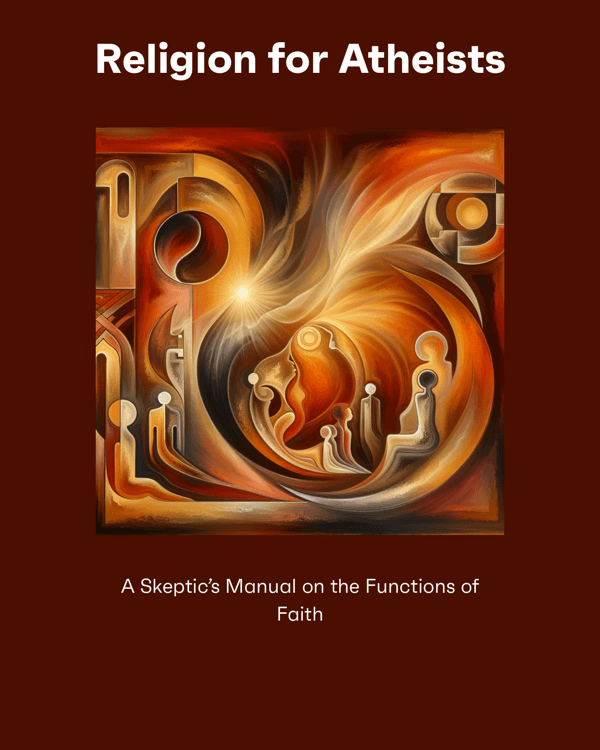
Religion for AtheistsReligion for Atheists

Religion for Atheists

user-icon

Alain de Botton

Art and architecture have long been integral to religious practice, offering profound opportunities for spiritual reflection and self-discovery. Historically, the Church dictated artistic themes, but today’s celebrity artists could potentially shift their focus toward addressing life’s deeper questions. Religious spaces, particularly in Catholicism, are designed to inspire moral growth, with architectural elements like the cross and pulpit fostering contemplation. Religion’s influence extends beyond belief in deities, offering cultural and moral frameworks that even secular societies can adapt, such as rituals and festivals that enrich human experience. Religious education, with its holistic approach to teaching values like humility and love, contrasts with traditional academic compartmentalization and could inspire modern educational reform. Religion also provides moral guidance through teachings, traditions, and representations like saints or virtues depicted in art, emphasizing kindness and integrity. While modern society often prioritizes freedom and curated perfection on social media, religious traditions remind us of the balance between despair and hope, encouraging empathy and self-compassion. They also offer perspective on life’s challenges, grounding us in humility through narratives like Job’s or Spinoza’s philosophies. Beyond individual reflection, religion fosters community through shared rituals and reconciliation practices, which could inspire secular alternatives to strengthen social bonds. Finally, religious institutions demonstrate the value of consistency, holistic engagement, and ritualized gatherings, offering a model for creating trust and connection in secular spaces.

clock11 min
bite8 Bite
target Wgląd

O czym to jest?

Art and architecture have long been intertwined with religion, offering profound insights into spirituality, morality, and human connection. This book explores how religious traditions, through their rituals, teachings, and creative expressions, address universal questions about life, community, and self-reflection. From the transformative power of sacred spaces to the moral guidance of ancient texts, it examines how these practices can inspire even those without faith. By drawing parallels between religious principles and modern societal challenges, it invites readers to rediscover timeless lessons in empathy, humility, and shared humanity.

Streszczenie książki

Alain de Botton is a London-based writer and television producer who tries to combine philosophy with everyday life. In his writings, he explores the philosophy of everyday life, inspired by his personal experiences as well as the insights of various artists, philosophers and thinkers.

Art and architecture have long been integral to religious practice, offering profound opportunities for spiritual reflection and self-discovery. Historically, the Church dictated artistic themes, but today’s celebrity artists could potentially shift their focus toward addressing life’s deeper questions. Religious spaces, particularly in Catholicism, are designed to inspire moral growth, with architectural elements like the cross and pulpit fostering contemplation. Religion’s influence extends beyond belief in deities, offering cultural and moral frameworks that even secular societies can adapt, such as rituals and festivals that enrich human experience. Religious education, with its holistic approach to teaching values like humility and love, contrasts with traditional academic compartmentalization and could inspire modern educational reform. Religion also provides moral guidance through teachings, traditions, and representations like saints or virtues depicted in art, emphasizing kindness and integrity. While modern society often prioritizes freedom and curated perfection on social media, religious traditions remind us of the balance between despair and hope, encouraging empathy and self-compassion. They also offer perspective on life’s challenges, grounding us in humility through narratives like Job’s or Spinoza’s philosophies. Beyond individual reflection, religion fosters community through shared rituals and reconciliation practices, which could inspire secular alternatives to strengthen social bonds. Finally, religious institutions demonstrate the value of consistency, holistic engagement, and ritualized gatherings, offering a model for creating trust and connection in secular spaces.

“Most of what makes a book 'good' is that we are reading it at the right moment for us.”

“Intimacy is the capacity to be rather weird with someone - and finding that that's ok with them.”

“Not being understood may be taken as a sign that there is much in one to understand.”

Aby przeczytać resztę książki, możesz pobrać Bitely

appstoregoogleplayapp gallery
Wszystkie kęsy
bite8 Bites

Rediscovering Life’s Depth Through Religious Wisdom

1
logo

Rituals That Unite: Lessons from Religion

2
logo

Guidance, Virtue, and Lessons from Faith

3
logo

Rethinking Education: Lessons from Religious Practices

4
logo

Finding Balance: Lessons from Faith and Humanity

5
logo

Finding Perspective Through Awe and Humility

6
logo

Shaping Souls Through Sacred Design

7
logo

Building Trust Through Rituals and Consistency

8
logo

Powiązane książki

mailbox-icon

Chcesz kontynuować naukę?

Nie przegap aktualizacji z ekscytującego wszechświata Bitely!

Logo
appstoregoogleplay
app gallery

Śledź nas w mediach społecznościowych

tiktokxinstagramyoutubelinkedinfacebook
© 2025 Bitely. Wszelkie prawa zastrzeżone.