Leadership & Entrepreneurship
Mixed SignalsMixed Signals

Mixed Signals

user-icon

Uri Gneezy

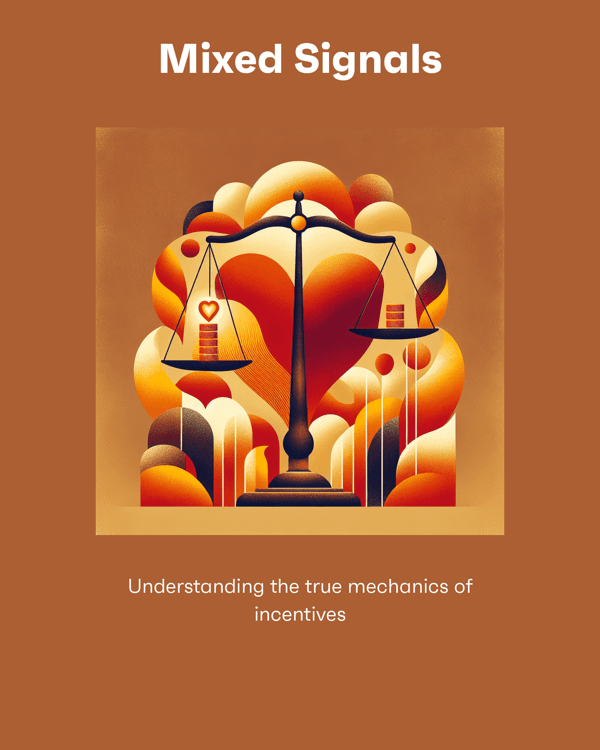
Incentives, whether monetary or symbolic, profoundly shape human behavior, but their effectiveness depends on how they align with intrinsic motivations and social perceptions. Money, while powerful, can sometimes undermine altruistic actions, as seen in blood donation campaigns where non-monetary rewards like pens or public recognition reinforce selfless values. Similarly, social signals play a critical role in decisions, such as choosing a Prius for its environmental statement or questioning a neighbor’s recycling motives when financial gain is involved. Poorly designed incentives, like Wells Fargo’s focus on quantity over ethics or historical tax systems that led to unintended manipulations, highlight the risks of oversimplification. Balancing individual and collective goals, as well as addressing biases like present bias, requires thoughtful incentive structures that resonate with the target audience. In the next section, we’ll delve deeper into why even small, symbolic rewards can sometimes outweigh financial incentives in fostering desired behaviors.

clock11 min
bite4 Bite
target Wgląd

O czym to jest?

Incentives shape human behavior in surprising and often unintended ways, as this book explores through compelling examples from everyday life, history, and business. From the motivations behind blood donation and recycling to the pitfalls of poorly designed workplace incentives, it delves into how social signals, self-perception, and biases influence our decisions. By examining cases like Wells Fargo’s scandal, Toyota Prius’s rise, and even medieval tax loopholes, the book reveals the complexities of aligning incentives with desired outcomes. With a focus on understanding human nature, it offers insights into crafting strategies that truly inspire action without backfiring.

Streszczenie książki

Uri Gneezy is a professor of economics and strategy at the University of California, San Diego Rady School of Management, where he holds the Epstein/Atkinson Endowed Chair in Behavioral Economics. Previously, he coauthored The Why Axis.

Incentives, whether monetary or symbolic, profoundly shape human behavior, but their effectiveness depends on how they align with intrinsic motivations and social perceptions. Money, while powerful, can sometimes undermine altruistic actions, as seen in blood donation campaigns where non-monetary rewards like pens or public recognition reinforce selfless values. Similarly, social signals play a critical role in decisions, such as choosing a Prius for its environmental statement or questioning a neighbor’s recycling motives when financial gain is involved. Poorly designed incentives, like Wells Fargo’s focus on quantity over ethics or historical tax systems that led to unintended manipulations, highlight the risks of oversimplification. Balancing individual and collective goals, as well as addressing biases like present bias, requires thoughtful incentive structures that resonate with the target audience. In the next section, we’ll delve deeper into why even small, symbolic rewards can sometimes outweigh financial incentives in fostering desired behaviors.

Aby przeczytać resztę książki, możesz pobrać Bitely

appstoregoogleplayapp gallery
Wszystkie kęsy
bite4 Bites

The Hidden Power of Non-Monetary Incentives

1
logo

Signals That Shape Decisions and Behavior

2
logo

When Incentives Backfire: Lessons in Motivation

3
logo

Crafting Incentives That Drive Genuine Action

4
logo

Powiązane książki

mailbox-icon

Chcesz kontynuować naukę?

Nie przegap aktualizacji z ekscytującego wszechświata Bitely!

Logo
appstoregoogleplay
app gallery

Śledź nas w mediach społecznościowych

tiktokxinstagramyoutubelinkedinfacebook
© 2025 Bitely. Wszelkie prawa zastrzeżone.