
Economy & Finance
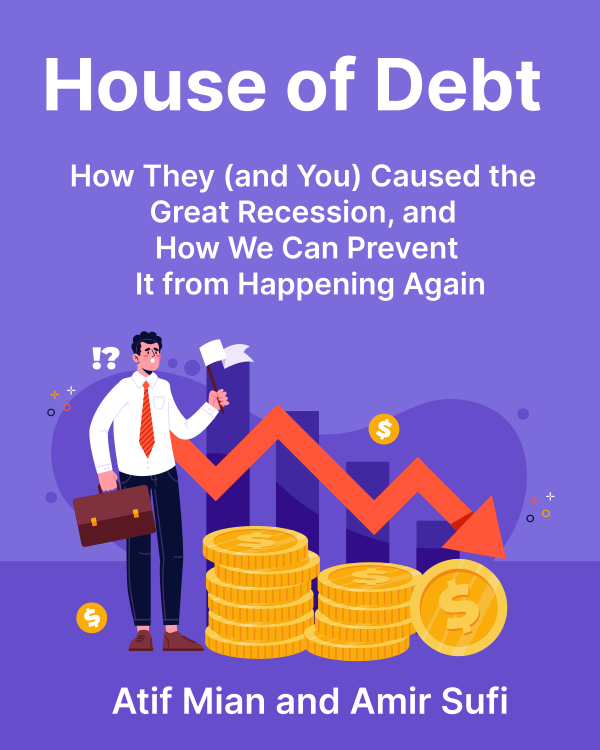
House of DebtHouse of Debt
House of Debt

House of Debt

user-icon

Amir Sufi

The economic recession is typically foregone by a significant buildup of consumer debt, followed by a substantial decline in household spending, resulting in loss of jobs in the whole economy. In addition, a bubble in housing was inflated during the Great Recession because lending institutions provided mortgages to borrowers who could not repay them, and complicated financial instruments concealed fraudulent and risky lending activities.

hashtaginvestment
hashtageconomics
hashtagbanking
hashtagmoney
hashtagpersonal-finance
clock17 min
bite8 Bite
target Wgląd

O czym to jest?

The bailouts we gave to the banks during the Great Recession weren’t the true causes of the economic slump. Instead, overlending mortgages to those who couldn't afford them was the real problem, creating heavy debt and, ultimately, a collapse of the consumer market. In House of Debt, the authors suggest developing new strategies for managing debt and boosting the economy to avoid the consequences of the boom-and-bust cycle in the future.

Streszczenie książki

Amir Sufi is an American economist known for his research in the fields of finance, macroeconomics, and household finance. He has made significant contributions to understanding the impact of household debt and financial crises on the economy.

The economic recession is typically foregone by a significant buildup of consumer debt, followed by a substantial decline in household spending, resulting in loss of jobs in the whole economy. In addition, a bubble in housing was inflated during the Great Recession because lending institutions provided mortgages to borrowers who could not repay them, and complicated financial instruments concealed fraudulent and risky lending activities.

Aby przeczytać resztę książki, możesz pobrać Bitely
appstoregoogleplayapp gallery
Wszystkie kęsy
bite8 Bites

Consumer debt plays a significant role in bringing about serious recessions and a drastic decline in household budgets.

1
logo

Borrowers with lower income levels suffer more than others from housing price declines.

2
logo

Debt-ridden households spend less during a recession, negatively impacting employment in the country.

3
logo

By lending money to unqualified borrowers, banks fostered the housing bubble.

4
logo

Fraudulent transactions and risky lending were hidden behind complex financial instruments.

5
logo

It isn't the ideal solution to bail out banks in the face of a debt-driven crisis.

6
logo

It is more efficient to forgive debt than to increase government spending and stimulate inflation in a recessionary economy.

7
logo

It might be possible to prevent the next recession by implementing a shared risk mortgage structure.

8
logo

Powiązane książki

mailbox-icon

Chcesz kontynuować naukę?

Nie przegap aktualizacji z ekscytującego wszechświata Bitely!

Logo
appstoregoogleplay
app gallery

Śledź nas w mediach społecznościowych

tiktokxinstagramyoutubelinkedinfacebook
© 2025 Bitely. Wszelkie prawa zastrzeżone.