
Biography & History
Hawai'iHawai'i

Hawai'i

user-icon

Sumner La Croix

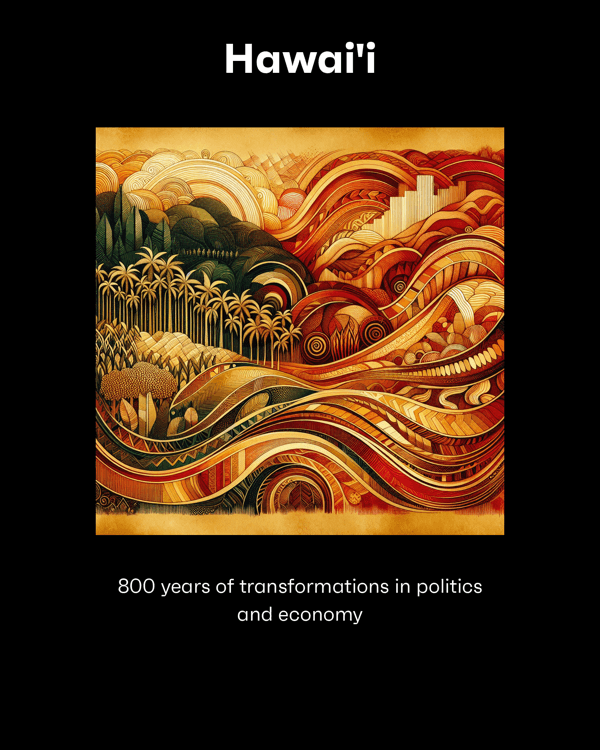
Hawaii's history reflects a profound transformation shaped by its fertile lands, skilled Polynesian settlers, and eventual colonization. Early agricultural abundance fostered societal growth, leading to the emergence of distinct social classes and centralized political systems. The Māhele introduced land ownership concepts, paving the way for foreign dominance in the sugar industry and Hawaii's annexation by the U.S., which marginalized Native Hawaiians. Despite gaining statehood in 1959, which brought political representation and economic growth, unresolved issues like the loss of sovereignty and land injustices linger. These developments highlight a complex journey from an egalitarian society to a state grappling with the legacies of colonialism and modernization.

clock14 min
bite8 Bite
target Wgląd

O czym to jest?

Hawaii’s history is a tale of transformation, from its early settlement by Polynesian voyagers to its eventual annexation and statehood under the United States. This narrative explores the islands’ evolution, shaped by agricultural abundance, political upheaval, and cultural resilience. Key themes include the rise of complex social structures, the impact of colonization, and the enduring struggle for Native Hawaiian sovereignty. Through centuries of change, Hawaii’s story reveals the profound interplay between tradition, power, and adaptation.

Streszczenie książki

Sumner La Croix is a professor emeritus at the University of Hawai’i-Mānoa and a research fellow with the University of Hawai’i Economic Research Organization. He has published dozens of academic articles on the economic history of Hawaii and East Asia.

Hawaii's history reflects a profound transformation shaped by its fertile lands, skilled Polynesian settlers, and eventual colonization. Early agricultural abundance fostered societal growth, leading to the emergence of distinct social classes and centralized political systems. The Māhele introduced land ownership concepts, paving the way for foreign dominance in the sugar industry and Hawaii's annexation by the U.S., which marginalized Native Hawaiians. Despite gaining statehood in 1959, which brought political representation and economic growth, unresolved issues like the loss of sovereignty and land injustices linger. These developments highlight a complex journey from an egalitarian society to a state grappling with the legacies of colonialism and modernization.

Aby przeczytać resztę książki, możesz pobrać Bitely
appstoregoogleplayapp gallery
Wszystkie kęsy
bite8 Bites

Polynesian Voyages: Hawaii’s Deliberate Discovery

1
logo

Hawaii's Transformation: From Abundance to Power

2
logo

Hawaii's Transformation: Trade, Power, and Land

3
logo

Hawaii’s Transformation: Land, Sugar, and Sovereignty

4
logo

Hawaii's Fall: Sugar, Power, and Colonization

5
logo

Citizenship and Corporate Control in Colonial Hawaii

6
logo

Hawaii’s Journey: From Colony to Statehood

7
logo

Land Reform and the Fight for Hawaiian Equity

8
logo

Powiązane książki

mailbox-icon

Chcesz kontynuować naukę?

Nie przegap aktualizacji z ekscytującego wszechświata Bitely!

Logo
appstoregoogleplay
app gallery

Śledź nas w mediach społecznościowych

tiktokxinstagramyoutubelinkedinfacebook
© 2025 Bitely. Wszelkie prawa zastrzeżone.