Self-Growth
DeviateDeviate

Deviate

user-icon

Beau Lotto

Our perception of reality is shaped by interpretation, not raw information. While the Information Age grants us access to endless data, meaning arises only when our brains process and contextualize it. This process, however, is limited by our senses, which filter and distort reality based on necessity, context, and past experiences. Optical illusions, like the infamous blue-and-black or gold-and-white dress, reveal how our minds interpret the same stimuli differently. Similarly, our assumptions, shaped by prior knowledge, can both aid and restrict our understanding of the world. Yet, through conscious effort, we can challenge these mental patterns, opening ourselves to new perspectives. Whether through embracing ambiguity, as seen in creative problem-solving, or adapting to novel experiences, like Ben Anderson’s echolocation or experiments with sensory tools, our brains demonstrate remarkable flexibility. By questioning assumptions and exposing ourselves to diverse stimuli, we can expand our perception, foster creativity, and navigate the world with greater adaptability.

clock20 min
bite8 Bite
target Wgląd

O czym to jest?

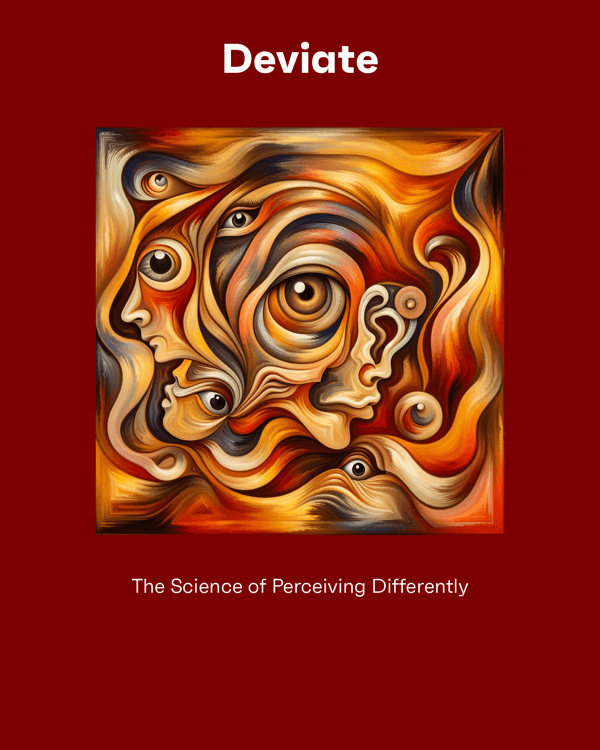
Our perception of reality is far from absolute—it’s shaped by interpretation, context, and imagination. This book explores the fascinating ways our brains process the world, from optical illusions and sensory limitations to the influence of past experiences and subconscious assumptions. Through engaging stories and thought-provoking examples, it reveals how we can challenge ingrained beliefs, embrace uncertainty, and unlock new ways of thinking. It’s a journey into the mind’s remarkable adaptability and its potential to reshape how we see the world.

Streszczenie książki

Beau Lotto is a professor of neuroscience at the University of London and founder of Lab of Misfits, a neuro-design studio. He has presented his research on cognitive functioning on the BBC, in National Geographic, and in multiple TED Talks.

Our perception of reality is shaped by interpretation, not raw information. While the Information Age grants us access to endless data, meaning arises only when our brains process and contextualize it. This process, however, is limited by our senses, which filter and distort reality based on necessity, context, and past experiences. Optical illusions, like the infamous blue-and-black or gold-and-white dress, reveal how our minds interpret the same stimuli differently. Similarly, our assumptions, shaped by prior knowledge, can both aid and restrict our understanding of the world. Yet, through conscious effort, we can challenge these mental patterns, opening ourselves to new perspectives. Whether through embracing ambiguity, as seen in creative problem-solving, or adapting to novel experiences, like Ben Anderson’s echolocation or experiments with sensory tools, our brains demonstrate remarkable flexibility. By questioning assumptions and exposing ourselves to diverse stimuli, we can expand our perception, foster creativity, and navigate the world with greater adaptability.

Aby przeczytać resztę książki, możesz pobrać Bitely

appstoregoogleplayapp gallery
Wszystkie kęsy
bite8 Bites

Why Reality Isn’t What You Think

1
logo

Decoding Reality: How Perception Shapes Truth

2
logo

Redefining Reality: The Brain’s Endless Adaptability

3
logo

How Context Shapes What We Perceive

4
logo

How Imagination Shapes Our Perception

5
logo

Challenging Assumptions: Redefining How We Perceive Reality

6
logo

Unlocking Creativity by Questioning Assumptions

7
logo

Embracing Uncertainty to Unlock Discovery

8
logo

Powiązane książki

mailbox-icon

Chcesz kontynuować naukę?

Nie przegap aktualizacji z ekscytującego wszechświata Bitely!

Logo
appstoregoogleplay
app gallery

Śledź nas w mediach społecznościowych

tiktokxinstagramyoutubelinkedinfacebook
© 2025 Bitely. Wszelkie prawa zastrzeżone.