Streszczenie książki
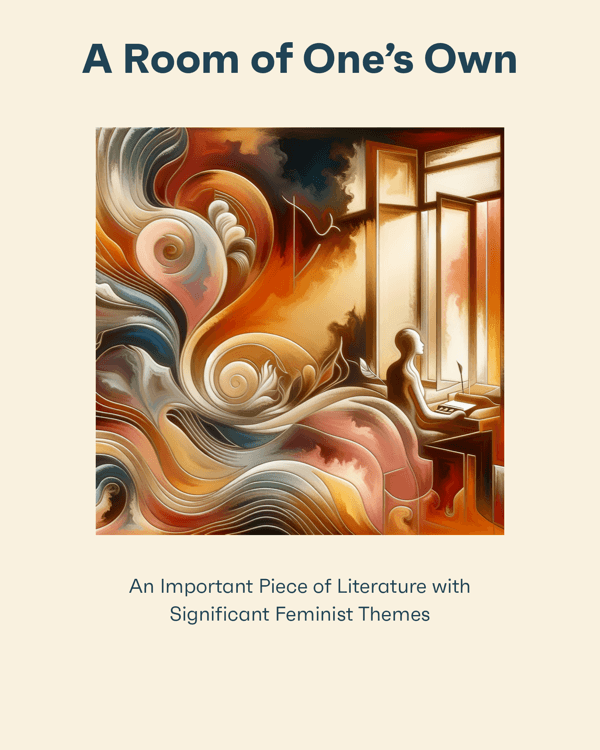
Virginia Woolf was one of the most esteemed writers of the Modernist era. Her works include novels like Mrs Dalloway, To the Lighthouse, and Orlando – all of which are considered classics.
Shakespeare’s works are celebrated for their poetic brilliance, yet his era was also rich with male contemporaries creating extraordinary art, while women’s voices were glaringly absent due to systemic barriers like limited education and societal constraints. Virginia Woolf, through her fictional Judith Shakespeare, highlighted the stifling conditions that silenced countless talented women throughout history, depriving the world of their potential masterpieces. By the 1920s, however, women’s literature began to flourish, offering diverse perspectives and breaking traditional molds, as seen in Mary Carmichael’s groundbreaking portrayal of female friendship and collaboration. Woolf argued that true artistic greatness transcends gender, requiring both material support and an "androgynous mind" capable of embracing the full spectrum of human experience. Yet, societal preoccupation with rigid gender roles, particularly men’s insecurities about women’s growing influence, often hindered such progress. Woolf envisioned a future where creativity thrived free from these constraints, enabling all individuals to contribute equally to the arts.
Aby przeczytać resztę książki, możesz pobrać
Bitely







 12 min
 6 Bite
 Wgląd
Wgląd 6 Bites