Buchzusammenfassung
Vivek Ramaswamy is an entrepreneur and political pundit. He has degrees in both molecular biology and law, and he’s the founder of the biotech company Roivant Sciences. He appeared on the cover of Forbes in 2015 for his work on drug development and now serves on the board of directors of the Philanthropy Roundtable and the Foundation for Research on Equal Opportunity. In 2021, he stepped down as Roivant’s CEO in order to focus on political analysis and commentary.
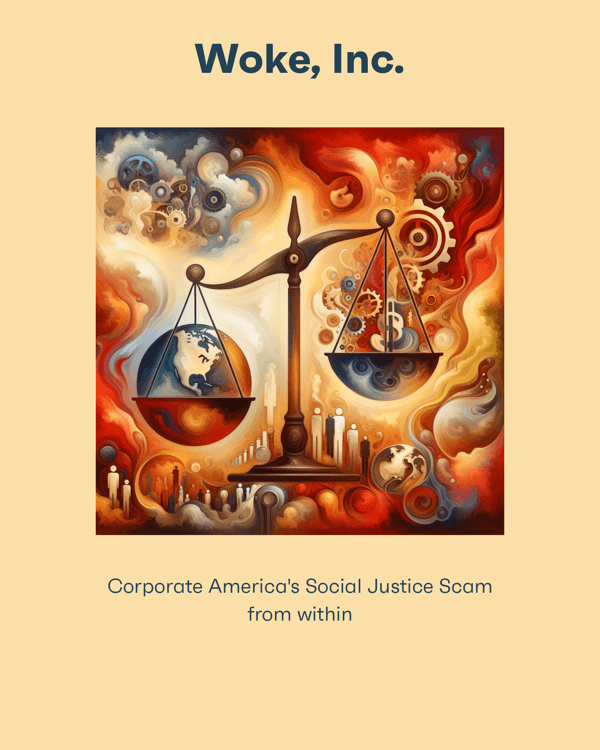
In October 2015, Hillary Clinton and Donald Trump both raised concerns about rising drug prices, prompting pharmaceutical companies to preemptively limit price hikes to 9.9% annually—a move that appeared altruistic but was designed to avoid stricter government regulation. This highlights the need to hold corporations accountable for conflicts of interest, such as those protected under the business judgment rule (BJR), which shields executives from legal consequences unless conflicts are proven. Restricting the BJR could deter executives from prioritizing personal or political agendas over corporate duties. Similarly, companies like Airbnb, which shared user data with the Chinese Communist Party to access the Chinese market, demonstrate how corporations exploit socially conscious branding while enabling authoritarian regimes. Domestically, such companies also act autocratically, as seen during the COVID-19 pandemic when platforms like YouTube censored dissenting opinions on lockdowns, raising questions about their motives. The rise of stakeholder capitalism has further complicated this dynamic, as businesses now feel compelled to engage in political and ethical debates, often imposing their values on the public. This shift undermines democracy by allowing corporations to dictate societal priorities, a trend mirrored in the growing influence of wokeness, which demands conformity and penalizes dissent. The author argues that wokeness, akin to a belief system, could face legal challenges under anti-discrimination laws. To address these issues, fostering genuine civic engagement, such as mandatory service for students, could help rebuild a sense of purpose and unity. Finally, the unchecked power of Big Tech, bolstered by Section 230 of the Communications Decency Act, enables censorship under the guise of content moderation. Revising Section 230 to align with First Amendment standards could ensure accountability while preserving competition among platforms.
Um den Rest des Buches zu lesen, können Sie
Bitely herunterladen

 11 min
 7 Bite
 Einblick


 7 Bites