Buchzusammenfassung
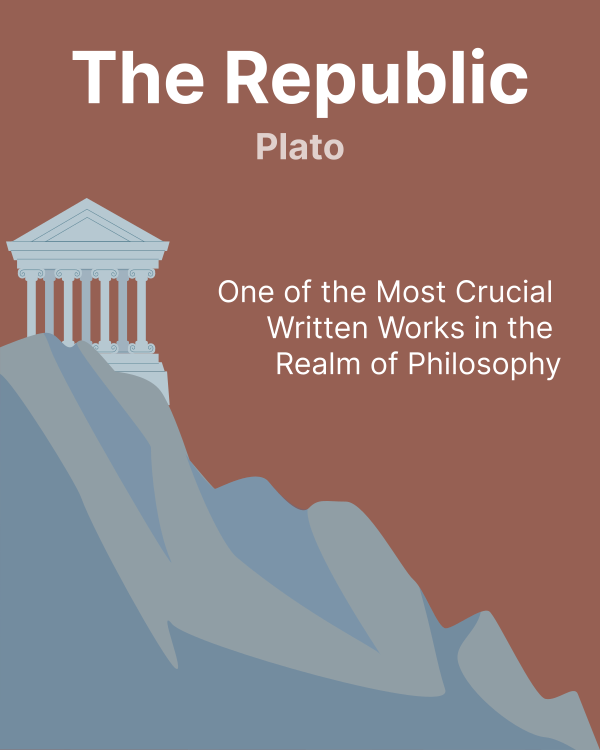
Plato was an Ancient Greek philosopher who was born in 428 in Athens. Plato established the Academy, a school of philosophy in Athens, where he taught the philosophical teachings that became known as Platonism. He provided the groundwork for many philosophical and scientific disputes and had a tremendous influence on many religions, including Christianity and Islam.
In Plato's dialogue, Socrates explores the concept of justice and the ideal form of government. He investigates the essential institutions required to lead individuals toward becoming more just. Socrates advocates for a city that embodies justice and brings benefits to its citizens, as well as for citizens who practice justice and, in turn, contribute to the well-being of their city. His ultimate goal is to demonstrate the superiority of being just compared to being unjust.
Enhance your clarity of thought by applying the Socratic method.
If you seek to reveal hidden assumptions, challenge the knowledge of others, or simply elucidate your own ideas, adopt a Socratic approach by bringing up questions that reveal any blind spots of your reasoning or the reasoning of others. This approach fosters a deeper understanding and critical thinking.
“Do not train a child to learn by force or harshness; but direct them to it by what amuses their minds, so that you may be better able to discover with accuracy the peculiar bent of the genius of each.”
“Education is teaching our children to desire the right things.”
“People are like dirt. They can either nourish you and help you grow as a person or they can stunt your growth and make you wilt and die.”
Um den Rest des Buches zu lesen, können Sie
Bitely herunterladen










 17 min
 9 Bite
 Einblick
 9 Bites