Buchzusammenfassung
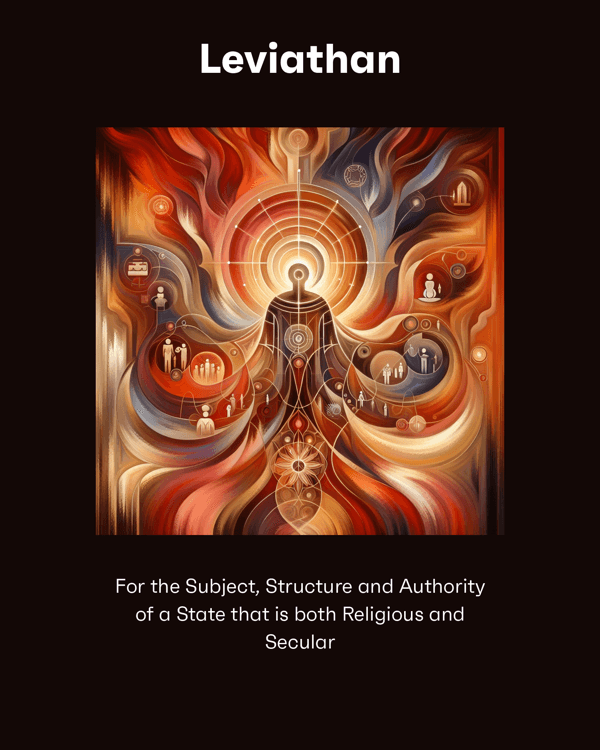
English philosopher Thomas Hobbes (1588-1679) was best known for his contributions to political thought. His writings, including Leviathan and De Cive (On the Citizen), are considered the cornerstones of Western political philosophy.
For a society to achieve security and order, its members must willingly surrender certain rights to a central authority, the leviathan, which derives its power from the collective strength of the people. This authority, akin to the head of a unified body, ensures stability by maintaining an indivisible rule, supported by ministers, militia, and economic sustenance. Human desires, rooted in the need for control, often lead to conflict due to inherent equality among individuals, but a sovereign ruler can mitigate this through consistent governance. Among the forms of government—aristocracy, democracy, and monarchy—monarchy is deemed most effective for its decisiveness, alignment of interests with subjects, and clear succession. To maintain peace, the ruler must monopolize the use of force, delegating enforcement to trusted agents while respecting the right to self-preservation. Language and sensory perception shape our understanding of the world, enabling rationality and the establishment of a social contract that fosters trust and minimizes conflict. Contrary to the belief that a powerful ruler limits freedom, the leviathan ensures true liberty by protecting individuals from harm and enabling societal progress. Hobbes argued that laws should be based on observable reality rather than religious or philosophical abstractions, grounding governance in empirical understanding. Centralized authority is essential to prevent discord, with the leviathan's rule superseding all other powers, including religious institutions, to maintain societal harmony.
Um den Rest des Buches zu lesen, können Sie
Bitely herunterladen








 15 min
 9 Bite
 Einblick
 9 Bites