Buchzusammenfassung
Franz Kafka was born in Prague in 1883 to a middle-class German-speaking Jewish family of Czech descent. His writing often features bizarre or surreal situations, and the term Kafkaesque is commonly used to describe anything absurd. Kafka was known to be riddled with self-doubt and destroyed much of what he wrote, but not all. His other noteworthy books include The Trial and The Castle.
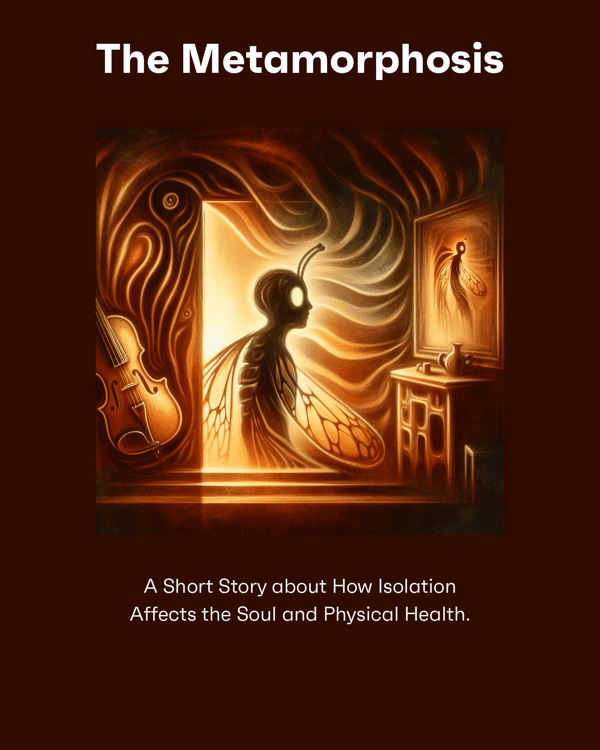
Gregor’s transformation into an insect triggers a profound shift in his family’s dynamics and his own sense of identity. Initially, his sister Grete shows compassion, caring for him and rearranging his room to accommodate his new form, but over time, her empathy wanes, and she assumes a more authoritative role. The picture of the lady in furs becomes a poignant symbol of Gregor’s fading humanity, as his family increasingly questions whether he is still the person they once knew. Financial pressures force the Samsas to adapt, with each member contributing to the household, yet Gregor’s inability to help deepens his guilt and isolation. His desperate attempts to connect, such as emerging to hear Grete’s violin playing, only result in further alienation, culminating in Grete’s demand to rid the family of the burden he represents. Heartbroken, Gregor retreats to his room, where he succumbs to his injuries and despair. His death brings relief to the Samsas, who begin to envision a hopeful future, symbolized by Grete’s growth and transformation, as they leave behind the weight of Gregor’s existence.
Um den Rest des Buches zu lesen, können Sie
Bitely herunterladen








 7 min
7 min 3 Bite
 Einblick
 3 Bites