Buchzusammenfassung
Ian Bremmer is a political risk consultant and the president of the Eurasia Group, the world’s top global political risk consulting and research company. His other publications include The End of the Free Market and The J Curve.
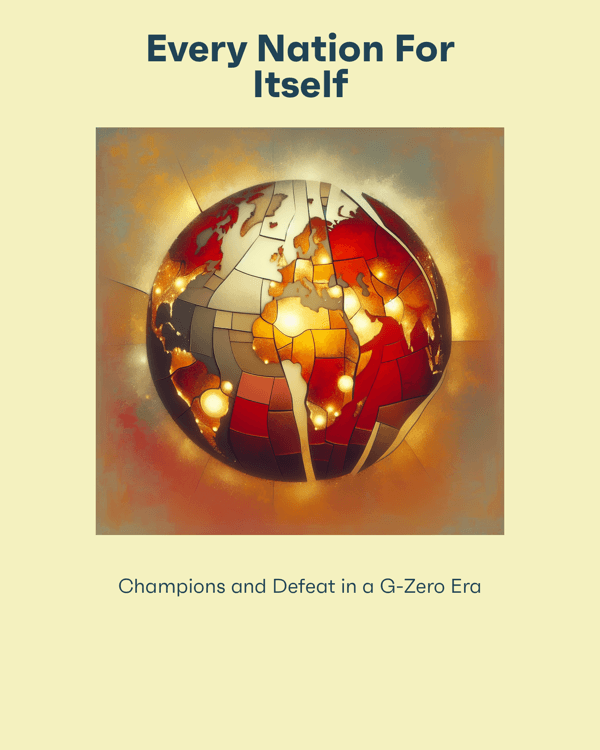
If China and the United States fail to cooperate, the world could face two divergent outcomes. In one scenario, weaker nations are left to choose sides, echoing a Cold War-like division, but this time between the US and China. Their economic interdependence, however, makes direct conflict far more damaging than during the US-USSR rivalry. In the other scenario, stronger nations maintain their independence, resulting in a fragmented world where regional powers like Brazil and Germany take the lead in addressing global issues, albeit within limited spheres of influence. Success in this G-Zero era depends on a nation’s ability to thrive independently, as seen with Brazil and Turkey, while countries overly reliant on traditional alliances, such as Japan and Mexico, may struggle. Yet, the absence of global leadership exacerbates challenges like climate change and food insecurity, with protectionist policies and domestic priorities undermining international cooperation. This leaderless state, while temporary, underscores the urgent need for a new global framework, which will likely hinge on the eventual collaboration—or continued rivalry—between the US and China.
Um den Rest des Buches zu lesen, können Sie
Bitely herunterladen








 10 min
 5 Bite
 Einblick
 5 Bites