Buchzusammenfassung
Srdja Popovic is a Serbian activist and a leader in the Otpor! movement that helped topple the Serbian dictator, Slobodan Milošević.
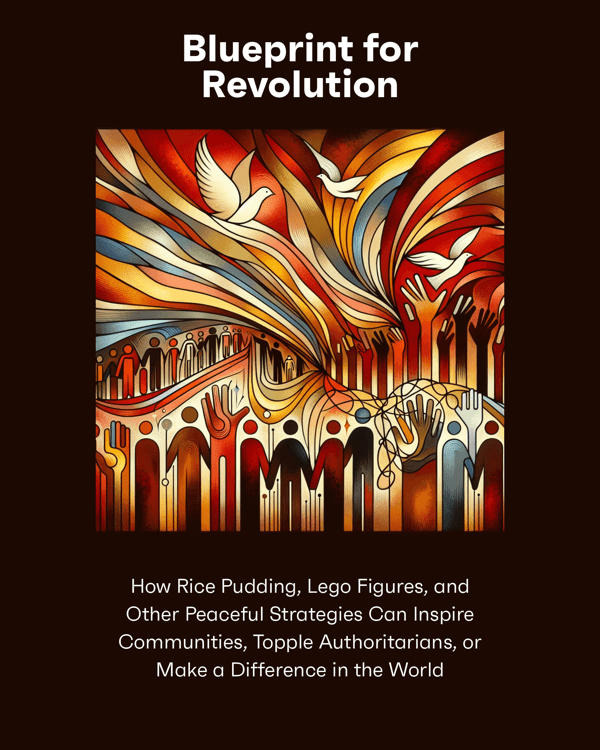
Revolutions are often associated with violence, but history reveals that peaceful movements are more effective in achieving lasting change and stable democracies. Research by Chenoweth and Stephan highlights that nonviolent uprisings are twice as likely to succeed as violent ones, with significantly lower risks of civil war and greater chances of sustaining democracy. Beyond statistics, nonviolent resistance fosters inclusivity, enabling participation from diverse groups, and often undermines authoritarian regimes through strategic actions. Examples like Burma’s Saffron Revolution and Serbia’s grassroots campaigns show how peaceful defiance can expose oppressive systems, while movements like Otpor! and Gandhi’s Salt March demonstrate the power of vision, humor, and small victories in rallying support. Activists like Harvey Milk illustrate the importance of addressing relatable issues to mobilize communities, and Gene Sharp’s theory on targeting regimes’ foundations of power underscores the strategic potential of nonviolence. Despite challenges, these approaches continue to inspire transformative change.
Um den Rest des Buches zu lesen, können Sie
Bitely herunterladen








 9 min
9 min 6 Bite
 Einblick
 6 Bites