Nature & Science
Who We Are and How We Got HereWho We Are and How We Got Here

Who We Are and How We Got Here

user-icon

David Reich

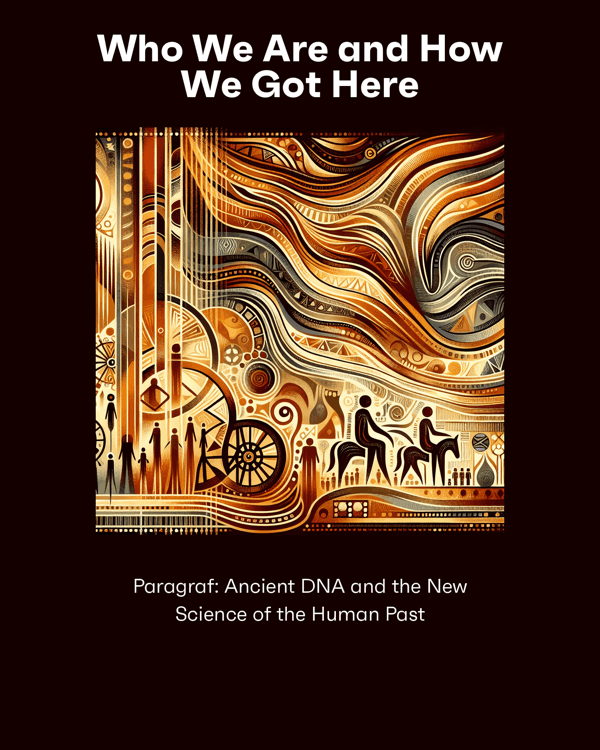
The genetic history of Europe, the Middle East, and Central Asia reveals a complex tapestry of shared ancestry and distinct ancient populations. DNA evidence from 10,000 to 4,000 years ago identifies four genetically divergent groups, as different from one another as modern Europeans are from East Asians. Ötzi the "Iceman," a 5,300-year-old mummy, highlights this complexity, with his closest modern relatives found in Sardinia, reflecting the island's isolation from later migrations. Meanwhile, mainland Europe bears the genetic imprint of the Yamnaya, a nomadic steppe culture that spread across the continent 5,000 years ago, introducing innovations like the wheel and domesticated horses. The Yamnaya's genetic legacy links them to the Ancient North Eurasians, an extinct population known only through DNA. Their descendants, the Corded Ware culture, emerged in northern Europe around 4,900 years ago, bridging the genetic and cultural gap to modern Europeans. These migrations also illuminate the spread of Indo-European languages, which likely originated south of the Caucasus and expanded through interactions with the Yamnaya. DNA research, though intricate, has revolutionized our understanding of human evolution, tracing all living humans back to "Mitochondrial Eve," who lived in Africa 200,000 years ago, and confirming that modern humans began their global migration only 50,000 years ago.

clock14 min
bite8 Bite
target Insight

What's it about?

This book delves into the fascinating story of human migration and genetic history, unraveling the complex web of ancestry that connects populations across continents. From the ancient farmers of the Near East to the nomadic Yamnaya of the Eurasian steppe, it explores how migrations, cultural exchanges, and power dynamics shaped the genetic and linguistic diversity of modern humans. Through groundbreaking DNA research, it challenges long-held theories about evolution and reveals surprising connections, such as Ötzi the Iceman's link to Sardinia or the Austronesian voyages to Madagascar. A captivating journey into our shared past, it highlights the intricate interplay between genetics, history, and identity.

Book summary

David Reich is a professor of genetics at Harvard University and a leading expert on ancient DNA. He was commended in 2015 for his role in the ancient DNA revolution and received the Dan David Prize for Archaeological and Natural Sciences in 2017 thanks to his work uncovering the interbreeding between Neanderthals and the ancestors of modern humans.

The genetic history of Europe, the Middle East, and Central Asia reveals a complex tapestry of shared ancestry and distinct ancient populations. DNA evidence from 10,000 to 4,000 years ago identifies four genetically divergent groups, as different from one another as modern Europeans are from East Asians. Ötzi the "Iceman," a 5,300-year-old mummy, highlights this complexity, with his closest modern relatives found in Sardinia, reflecting the island's isolation from later migrations. Meanwhile, mainland Europe bears the genetic imprint of the Yamnaya, a nomadic steppe culture that spread across the continent 5,000 years ago, introducing innovations like the wheel and domesticated horses. The Yamnaya's genetic legacy links them to the Ancient North Eurasians, an extinct population known only through DNA. Their descendants, the Corded Ware culture, emerged in northern Europe around 4,900 years ago, bridging the genetic and cultural gap to modern Europeans. These migrations also illuminate the spread of Indo-European languages, which likely originated south of the Caucasus and expanded through interactions with the Yamnaya. DNA research, though intricate, has revolutionized our understanding of human evolution, tracing all living humans back to "Mitochondrial Eve," who lived in Africa 200,000 years ago, and confirming that modern humans began their global migration only 50,000 years ago.

To read rest of the book, you can download Bitely

appstoregoogleplayapp gallery
All Bites
bite8 Bites

Tracing Humanity: DNA's Journey Through Time

1
logo

Out of Africa: Humanity's Sole Survival

2
logo

Ancient Migrations That Shaped Modern DNA

3
logo

Genetic Echoes of India's Ancient Migrations

4
logo

Tracing Ancient Journeys: The First Americans

5
logo

Tracing Ancient Lineages: East Asia's Genetic Odyssey

6
logo

Tracing Humanity's Journey Through Ancient Migrations

7
logo

Power, Migration, and the Genetic Tapestry

8
logo

Related Books

mailbox-icon

Want to keep learning?

Big ideas, bite-sized lessons—feed your curiosity every day with Bitely!