Nature & Science
When Einstein Walked with GödelWhen Einstein Walked with Gödel

When Einstein Walked with Gödel

user-icon

Jim Holt

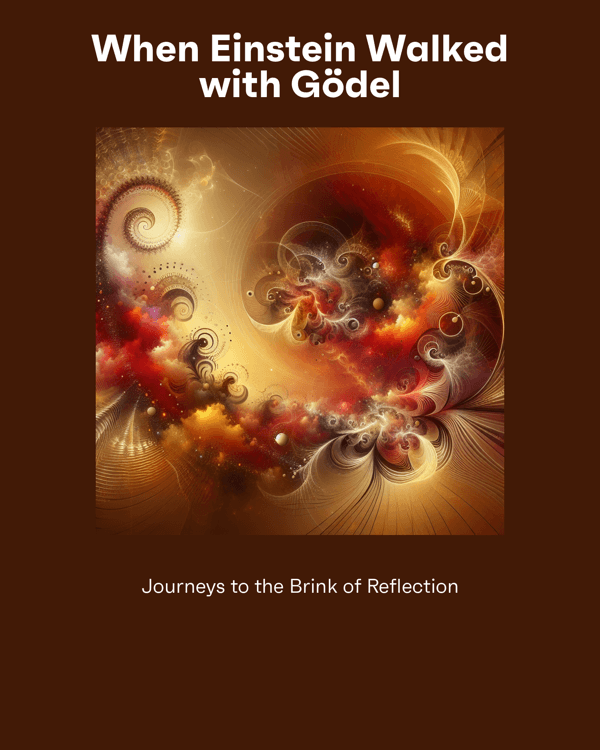
The universe's origins, widely attributed to the big bang 13.82 billion years ago, are well-accepted, but its ultimate fate remains uncertain, with theories like the big chill, big crunch, and big crack-up offering bleak possibilities. Humanity, however, is predicted to endure long enough to avoid these cosmic finales. Albert Einstein, a towering figure in science, revolutionized physics with his 1905 papers but faced isolation later in life due to his opposition to quantum mechanics. His friendship with Kurt Gödel highlighted their shared belief in the connection between mathematics and physical reality. The pursuit of a unified theory continues, with string theory attempting to reconcile relativity and quantum mechanics, though it faces criticism for its lack of empirical evidence. Alan Turing, a pioneer of computer science, left behind a legacy of brilliance and mystery, with his death still shrouded in controversy. Mathematics, often perceived as daunting, reveals innate human intuition through discoveries like Stanislas Dehaene's "number sense" and the enduring allure of prime numbers. The concept of infinity, both vast and infinitesimal, has captivated thinkers for centuries, with advancements like Abraham Robinson's work on infinitesimals reshaping its role in modern mathematics. Gödel expanded Einstein's relativity to question the nature of time, proposing a rotational universe where time might not exist. Pure mathematics, celebrated for its elegance, bridges logic and beauty, as seen in Benoit Mandelbrot's fractal geometry, which uncovers self-similar patterns in nature, blending simplicity with complexity.

clock15 min
bite8 Bite
target Insight

What's it about?

This book delves into the profound mysteries of the universe, exploring concepts that range from the origins of existence to the intricate connections between mathematics, physics, and philosophy. It examines groundbreaking theories, from Einstein’s relativity to the enigmatic possibilities of string theory, while also reflecting on the lives of visionaries like Alan Turing and Kurt Gödel. Through captivating narratives, it unravels humanity’s quest to understand infinity, time, and the fundamental nature of reality, blending scientific discovery with the enduring beauty of mathematical thought.

Book summary

Jim Holt is an American journalist and essayist whose work focuses on popular science. His writings have appeared in the New York Times, the New York Times Magazine, the New Yorker, and Slate. He has published several books, including Stop Me If You've Heard This: A History and Philosophy of Jokes and the New York Times best seller Why Does the World Exist?

The universe's origins, widely attributed to the big bang 13.82 billion years ago, are well-accepted, but its ultimate fate remains uncertain, with theories like the big chill, big crunch, and big crack-up offering bleak possibilities. Humanity, however, is predicted to endure long enough to avoid these cosmic finales. Albert Einstein, a towering figure in science, revolutionized physics with his 1905 papers but faced isolation later in life due to his opposition to quantum mechanics. His friendship with Kurt Gödel highlighted their shared belief in the connection between mathematics and physical reality. The pursuit of a unified theory continues, with string theory attempting to reconcile relativity and quantum mechanics, though it faces criticism for its lack of empirical evidence. Alan Turing, a pioneer of computer science, left behind a legacy of brilliance and mystery, with his death still shrouded in controversy. Mathematics, often perceived as daunting, reveals innate human intuition through discoveries like Stanislas Dehaene's "number sense" and the enduring allure of prime numbers. The concept of infinity, both vast and infinitesimal, has captivated thinkers for centuries, with advancements like Abraham Robinson's work on infinitesimals reshaping its role in modern mathematics. Gödel expanded Einstein's relativity to question the nature of time, proposing a rotational universe where time might not exist. Pure mathematics, celebrated for its elegance, bridges logic and beauty, as seen in Benoit Mandelbrot's fractal geometry, which uncovers self-similar patterns in nature, blending simplicity with complexity.

To read rest of the book, you can download Bitely

appstoregoogleplayapp gallery
All Bites
bite8 Bites

Einstein and Gödel: A Universe Reimagined

1
logo

Relativity’s Paradoxes: Einstein, Gödel, and Time

2
logo

Unlocking the Brain’s Hidden Number Sense

3
logo

The Hidden Beauty of Pure Mathematics

4
logo

Exploring Infinity: From Vastness to the Infinitesimal

5
logo

The Enigmatic Death of Alan Turing

6
logo

Unraveling the Universe: The Promise and Pitfalls of String Theory

7
logo

Unraveling the Universe's Ultimate Destiny

8
logo

Related Books

mailbox-icon

Want to keep learning?

Big ideas, bite-sized lessons—feed your curiosity every day with Bitely!