Leadership & Entrepreneurship
UnworkingUnworking

Unworking

user-icon

Jeremy Myerson & Philip Ross

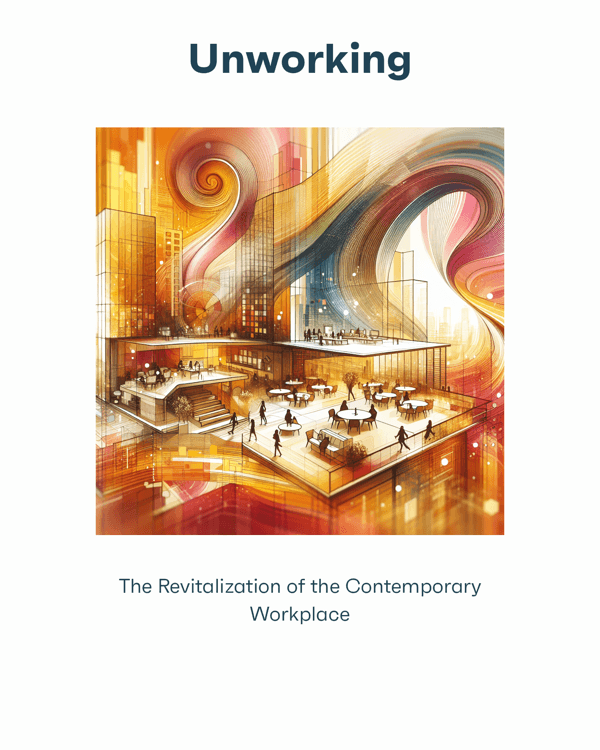
The modern workplace is shifting from a purely functional focus to one centered on experience, driven by the rise of remote and hybrid work. Companies are reimagining offices as appealing destinations, emphasizing employee satisfaction, well-being, and purpose by drawing inspiration from industries like hospitality and entertainment. Roles such as Chief Experience Officer highlight this shift toward prioritizing experience over efficiency. Activity-based working (ABW) has gained popularity, offering employees flexibility to choose spaces suited to their tasks, while community hubs provide opportunities for connection and creativity. Technology is revolutionizing offices, transforming them into intelligent ecosystems with tools like sensors and AI that optimize layouts, enhance productivity, and improve well-being. Hybrid work is also reshaping urban landscapes, challenging traditional central business districts and promoting mixed-use developments that integrate work, living, and recreation. As offices and cities evolve together, the focus remains on adaptability, inclusivity, and fostering a sense of community to meet the needs of a changing workforce.

clock10 min
bite5 Bite
target Insight

What's it about?

The modern workplace is transforming from a purely functional environment into one centered on experience, driven by the rise of remote and hybrid work. Businesses are reimagining offices as dynamic, engaging spaces that employees choose to visit, focusing on well-being, culture, and purpose. Drawing inspiration from industries like hospitality and entertainment, organizations aim to create immersive, flexible environments that balance collaboration, individual focus, and creativity. As technology reshapes workflows and urban planning evolves to accommodate hybrid lifestyles, the future of workspaces lies in adaptability, inclusivity, and fostering meaningful connections.

Book summary

Jeremy Myerson is a respected academic and writer, holding the position of Professor Emeritus at the Royal College of Art as well as the Helen Hamlyn Chair of Design. He’s extensively explored design and innovation, and one of his notable books includes Designing a World for Everyone.

The modern workplace is shifting from a purely functional focus to one centered on experience, driven by the rise of remote and hybrid work. Companies are reimagining offices as appealing destinations, emphasizing employee satisfaction, well-being, and purpose by drawing inspiration from industries like hospitality and entertainment. Roles such as Chief Experience Officer highlight this shift toward prioritizing experience over efficiency. Activity-based working (ABW) has gained popularity, offering employees flexibility to choose spaces suited to their tasks, while community hubs provide opportunities for connection and creativity. Technology is revolutionizing offices, transforming them into intelligent ecosystems with tools like sensors and AI that optimize layouts, enhance productivity, and improve well-being. Hybrid work is also reshaping urban landscapes, challenging traditional central business districts and promoting mixed-use developments that integrate work, living, and recreation. As offices and cities evolve together, the focus remains on adaptability, inclusivity, and fostering a sense of community to meet the needs of a changing workforce.

To read rest of the book, you can download Bitely

appstoregoogleplayapp gallery
All Bites
bite5 Bites

Designing Workspaces for a Diverse Future

1
logo

Smart Workspaces: Redefining Offices with Technology

2
logo

Designing Workspaces That Inspire and Empower

3
logo

Redefining Workspaces: The Rise of Hybrid Cities

4
logo

Designing Workspaces for Diversity and Inclusion

5
logo

Related Books

mailbox-icon

Want to keep learning?

Big ideas, bite-sized lessons—feed your curiosity every day with Bitely!