Book summary
David Robson is a science writer, whose work has been published in the Times, the Guardian, the Atlantic, and the Washington Post. His first book, The Intelligence Trap, has been published in 15 languages.
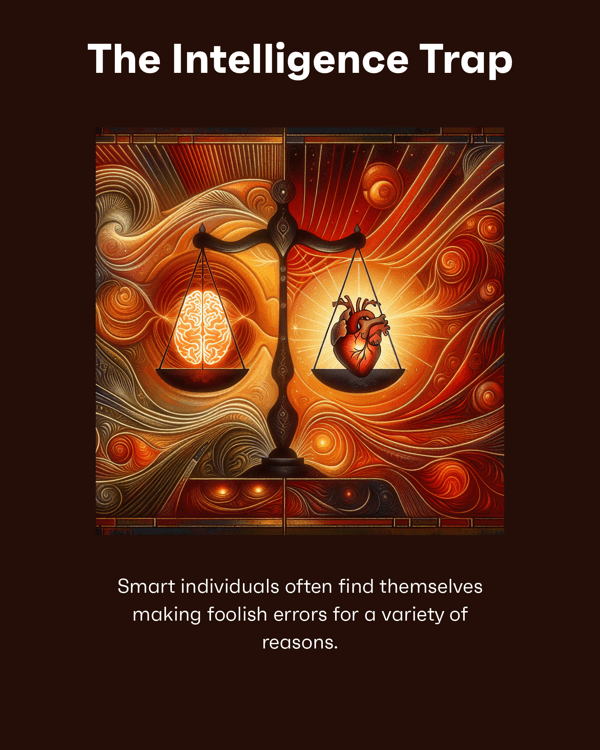
The journey to overcoming the intelligence trap begins with three core principles: cognitive evaluation, mental modesty, and emotional recognition. Cognitive evaluation emphasizes the use of “ethical mathematics,” a methodical approach where pros and cons of a decision are listed, assigned numerical values based on importance, and balanced to separate logic from emotion. Techniques like “thinking about the opposite” further refine reasoning by challenging initial judgments. A historical example of dysrationalia occurred on June 17, 1922, in Atlantic City, when a séance orchestrated by Jean, the spiritualist wife of Arthur Conan Doyle, aimed to contact Harry Houdini’s deceased mother. While Doyle was captivated by the session, Houdini’s skepticism led him to identify inconsistencies, underscoring how even brilliant individuals can fall prey to irrational beliefs.
To read rest of the book, you can download
Bitely







 1 min
1 min 2 Bite
 Insight
 2 Bites