Nature & Science
Origin StoryOrigin Story

Origin Story

user-icon

David Christian

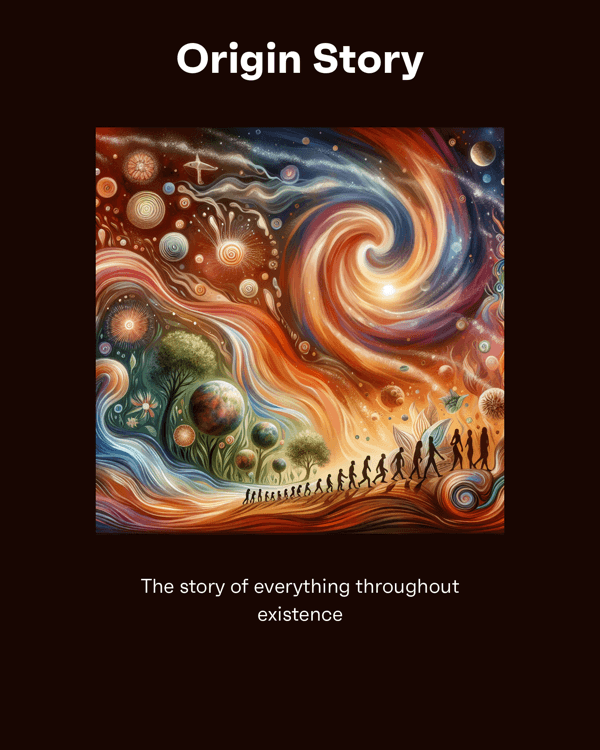
Under optimal conditions, single-celled organisms evolved into complex multicellular life, driven by photosynthesis and oxygen adaptation. Plants, fungi, and animals transitioned from sea to land, overcoming gravity through structural innovations like plant plumbing and animal circulatory systems. Intelligence advanced incrementally through natural selection, but catastrophic events also shaped evolution. Sixty-six million years ago, an asteroid wiped out dinosaurs, triggering a "nuclear winter" that decimated ecosystems. Mammals, particularly small rodent-like species, thrived in the aftermath, paving the way for primates and eventually humans. Life's story is marked by moments of complexity emerging under perfect conditions, beginning with the Big Bang 13.8 billion years ago. The universe, initially smaller than an atom, expanded rapidly, forming basic particles, atoms, and eventually stars 100 million years later. Stars, through their formation and explosive deaths, scattered elements essential for planets like Earth. Our solar system formed from residual star materials, with rocky planets like Earth emerging closer to the sun. Earth’s unique climate regulation and chemical balance fostered life, as demonstrated by Stanley Miller’s 1953 experiment showing amino acids forming under early Earth-like conditions. Over six million years, humans evolved distinctively, with bipedalism, tool use, and language revolutionizing survival and knowledge-sharing. Agriculture later transformed human societies, enabling specialization, trade, and interconnected communities. Photosynthesis, a pivotal innovation, increased energy availability, while oxygenation events reshaped ecosystems, leading to eukaryotes and sexual reproduction, accelerating evolution. Today, humanity’s impact defines the Anthropocene, marked by economic growth, inequality, and environmental crises. Fossil fuels and technological advances have revolutionized life but at significant ecological costs. As we face planetary boundaries, sustainable choices remain crucial for securing our future.

clock20 мин
bite12 Bite
target Инсайт

О чём это?

The book delves into the intricate story of life and the universe, exploring pivotal moments that shaped existence as we know it. From the origins of the cosmos and the emergence of life to humanity's transformative milestones, it examines how energy, adaptation, and innovation have driven progress. With a focus on evolution, catastrophic events, and human impact, the narrative connects the past, present, and future, offering a profound look at our place in the grand timeline of existence. Engaging and thought-provoking, it highlights both the marvels and challenges of our journey.

Резюме книги

David Christian is a professor of history at Macquarie University. He co-founded the Big History Project along with Bill Gates and is the author of Origin Story: A Big History of Everything.

Under optimal conditions, single-celled organisms evolved into complex multicellular life, driven by photosynthesis and oxygen adaptation. Plants, fungi, and animals transitioned from sea to land, overcoming gravity through structural innovations like plant plumbing and animal circulatory systems. Intelligence advanced incrementally through natural selection, but catastrophic events also shaped evolution. Sixty-six million years ago, an asteroid wiped out dinosaurs, triggering a "nuclear winter" that decimated ecosystems. Mammals, particularly small rodent-like species, thrived in the aftermath, paving the way for primates and eventually humans. Life's story is marked by moments of complexity emerging under perfect conditions, beginning with the Big Bang 13.8 billion years ago. The universe, initially smaller than an atom, expanded rapidly, forming basic particles, atoms, and eventually stars 100 million years later. Stars, through their formation and explosive deaths, scattered elements essential for planets like Earth. Our solar system formed from residual star materials, with rocky planets like Earth emerging closer to the sun. Earth’s unique climate regulation and chemical balance fostered life, as demonstrated by Stanley Miller’s 1953 experiment showing amino acids forming under early Earth-like conditions. Over six million years, humans evolved distinctively, with bipedalism, tool use, and language revolutionizing survival and knowledge-sharing. Agriculture later transformed human societies, enabling specialization, trade, and interconnected communities. Photosynthesis, a pivotal innovation, increased energy availability, while oxygenation events reshaped ecosystems, leading to eukaryotes and sexual reproduction, accelerating evolution. Today, humanity’s impact defines the Anthropocene, marked by economic growth, inequality, and environmental crises. Fossil fuels and technological advances have revolutionized life but at significant ecological costs. As we face planetary boundaries, sustainable choices remain crucial for securing our future.

Чтобы прочитать остальную часть книги, скачайте Bitely

appstoregoogleplayapp gallery
Все кусочки
bite12 Bites

From Nothing to Everything: The Universe Unfolds

1
logo

From Starbirth to Stardust: The Universe's Evolution

2
logo

Forged by the Sun: Earth's Chaotic Origins

3
logo

How Earth Became the Cradle of Life

4
logo

From Prokaryotes to Progress: Life’s Evolutionary Leap

5
logo

From Oceans to Asteroids: Life’s Evolutionary Triumphs

6
logo

From Fire to Language: Humanity's Evolutionary Leap

7
logo

From Photosynthesis to Civilization’s Dawn

8
logo

From Surplus to Civilization: The Rise of Trade

9
logo

Energy Revolutions That Shaped Our World

10
logo

Humans: Shaping Earth’s Future and Fate

11
logo

Shaping Earth's Future: The Choice is Ours

12
logo

Связанные книги

mailbox-icon

Хотите продолжать учиться?

Не пропустите обновления из захватывающей вселенной Bitely!