
Biography & History
I Know why the Caged Bird SingsI Know why the Caged Bird Sings

I Know why the Caged Bird Sings

user-icon

Maya Angelou

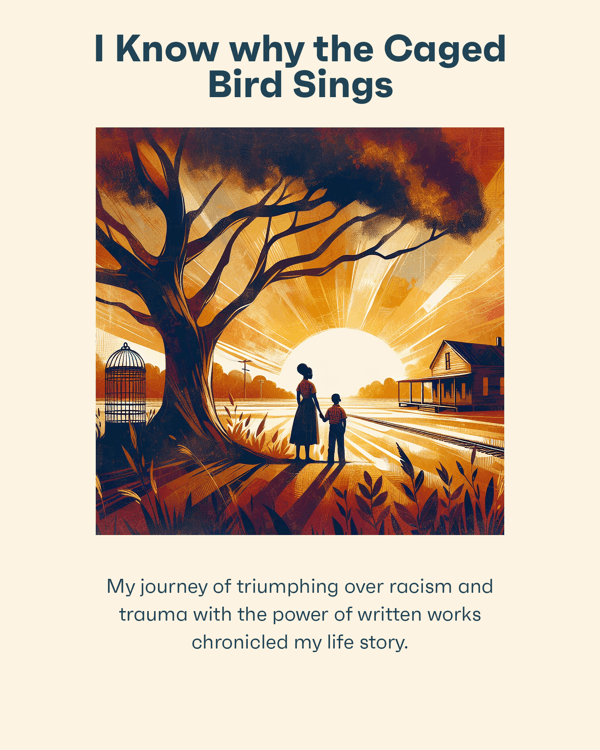
Maya and Bailey’s lives were upended by their parents’ divorce, leading them to Stamps, Arkansas, where their grandmother, Momma, ran the town’s only Black-owned store. Stamps, steeped in segregation and hardship, offered Maya both a sense of security and a lesson in resilience, despite her feelings of alienation due to her appearance. Momma’s guidance emphasized dignity and perseverance, while Maya found solace in her bond with Bailey and the mentorship of Mrs. Flowers, who nurtured her love for language and literature. As Bailey matured, racial tensions in Stamps escalated, prompting Momma to send the siblings to their mother in San Francisco. There, amidst the backdrop of World War II and the city’s shifting demographics, Maya confronted racism and societal barriers, ultimately breaking through as the first Black streetcar conductor. Earlier, a brief but impactful stay in St. Louis with their mother had introduced Maya to new joys but also left her deeply scarred by trauma, leading to her retreat into silence and eventual return to Stamps.

clock7 мин
bite4 Bite
target Инсайт

О чём это?

Maya Angelou’s memoir captures the profound journey of a young Black girl navigating a world shaped by segregation, resilience, and self-discovery. From the dusty streets of Stamps, Arkansas, to the bustling cityscape of San Francisco, Maya’s story unfolds against the backdrop of systemic racism, familial bonds, and transformative mentorship. Themes of identity, perseverance, and the power of language weave through her experiences, illuminating the struggles and triumphs that define her path. This poignant narrative offers a deeply personal yet universally resonant exploration of survival and growth.

Резюме книги

Maya Angelou was raised in Stamps, Arkansas. In addition to her bestselling autobiographies, she is also the author of many volumes of poetry, among them Phenomenal Woman, On the Pulse of Morning, and Mother. Maya Angelou died in 2014.

Maya and Bailey’s lives were upended by their parents’ divorce, leading them to Stamps, Arkansas, where their grandmother, Momma, ran the town’s only Black-owned store. Stamps, steeped in segregation and hardship, offered Maya both a sense of security and a lesson in resilience, despite her feelings of alienation due to her appearance. Momma’s guidance emphasized dignity and perseverance, while Maya found solace in her bond with Bailey and the mentorship of Mrs. Flowers, who nurtured her love for language and literature. As Bailey matured, racial tensions in Stamps escalated, prompting Momma to send the siblings to their mother in San Francisco. There, amidst the backdrop of World War II and the city’s shifting demographics, Maya confronted racism and societal barriers, ultimately breaking through as the first Black streetcar conductor. Earlier, a brief but impactful stay in St. Louis with their mother had introduced Maya to new joys but also left her deeply scarred by trauma, leading to her retreat into silence and eventual return to Stamps.

Чтобы прочитать остальную часть книги, скачайте Bitely
appstoregoogleplayapp gallery
Все кусочки
bite4 Bites

Resilience and Belonging in a Divided World

1
logo

A Voice Silenced, A Spirit Unbroken

2
logo

Finding Strength in Stillness and Words

3
logo

Rising Through Struggle: Maya’s Defiant Journey

4
logo

Связанные книги

mailbox-icon

Хотите продолжать учиться?

Не пропустите обновления из захватывающей вселенной Bitely!