Economy & Finance
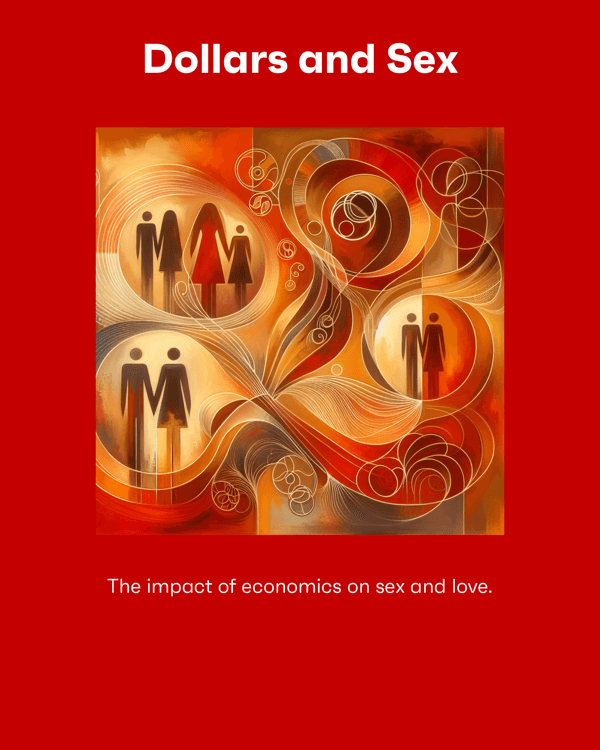
Dollars and SexDollars and Sex

Dollars and Sex

user-icon

Marina Adshade

Marriage, often seen as a romantic union, also serves practical and economic purposes, functioning like a partnership where complementary skills enhance household efficiency. Intimacy within marriage, viewed through an economic lens, is both a shared "service" and a practical arrangement that minimizes risks and effort compared to external alternatives. Broader societal trends, such as shifting gender dynamics on college campuses and evolving cultural norms around sexuality, highlight how economic principles like supply and demand influence relationships. Education and financial stability further shape marital success, with higher education correlating to lower divorce rates due to reduced economic strain. Historical shifts, from the decline of polygamy to the rise of premarital sexual activity, reflect changing economic and social landscapes, driven by advancements like contraception and increasing female autonomy. These interconnected factors illustrate how relationships are deeply influenced by both personal and societal economics, setting the stage for further exploration of how modern dynamics continue to reshape human connections.

clock13 мин
bite7 Bite
target Инсайт

О чём это?

Why do people marry, and how do societal, economic, and cultural forces shape relationships? This book delves into the practical and strategic aspects of marriage, intimacy, and modern dating, exploring how economics influences everything from household dynamics to shifting sexual norms. With engaging insights into topics like online dating, polygamy, financial inequality, and contraception, it reveals the surprising ways human behavior adapts to changing circumstances. Thought-provoking and richly detailed, it offers a fresh perspective on love, partnership, and the evolving landscape of relationships.

Резюме книги

Dr. Marina Adshade, PhD, teaches at the University of British Columbia’s School of Economics. She regularly writes for the Globe and Mail and is a frequent contributor to publications such as Time and the Wall Street Journal.

Marriage, often seen as a romantic union, also serves practical and economic purposes, functioning like a partnership where complementary skills enhance household efficiency. Intimacy within marriage, viewed through an economic lens, is both a shared "service" and a practical arrangement that minimizes risks and effort compared to external alternatives. Broader societal trends, such as shifting gender dynamics on college campuses and evolving cultural norms around sexuality, highlight how economic principles like supply and demand influence relationships. Education and financial stability further shape marital success, with higher education correlating to lower divorce rates due to reduced economic strain. Historical shifts, from the decline of polygamy to the rise of premarital sexual activity, reflect changing economic and social landscapes, driven by advancements like contraception and increasing female autonomy. These interconnected factors illustrate how relationships are deeply influenced by both personal and societal economics, setting the stage for further exploration of how modern dynamics continue to reshape human connections.

Чтобы прочитать остальную часть книги, скачайте Bitely

appstoregoogleplayapp gallery
Все кусочки
bite7 Bites

Empowered Choices: How Economics Shaped Modern Sexuality

1
logo

Contraception, Culture, and the Economics of Risk

2
logo

Sex, Supply, and Demand on Campus

3
logo

Redefining Compatibility: The Economics of Online Dating

4
logo

Marriage: The Economics of Love and Partnership

5
logo

Polygamy, Economics, and the Power of Education

6
logo

Economic Forces Shaping Love and Marriage

7
logo

Связанные книги

mailbox-icon

Хотите продолжать учиться?

Не пропустите обновления из захватывающей вселенной Bitely!