Psychology
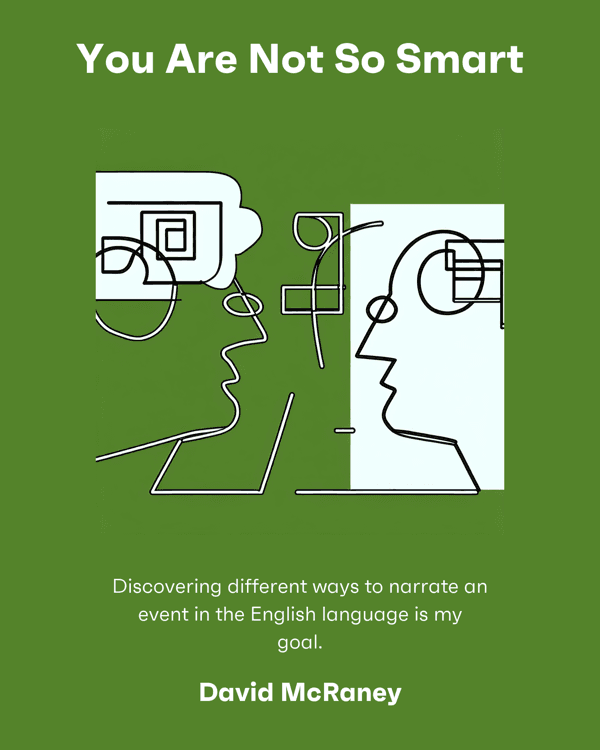
You Are Not So SmartYou Are Not So Smart
You Are Not So Smart

You Are Not So Smart

user-icon

David McRaney

Humans often overestimate their intelligence, overlooking the reality of our frequent self-delusions. We routinely give significance to sheer coincidences, favor information that echo our preconceptions, and craft stories that vindicate our implicit inclinations. While such self-deceptions might propel us forward in certain realms, they potentially lead to judgmentality, resistance to cooperation, and a dangerous allegiance to those in power. Recognizing our propensity for self-deception is crucial to mitigate its adverse effects. It's essential to adopt a questioning stance toward authority to avert harm. Our innate tendency to align with peers is deep-rooted and typically unconscious. This instinct can steer us toward socially constructive behaviors that enhance teamwork, but it can also leave us vulnerable. Blind obedience to leaders can be detrimental; thus, we should actively challenge authority when it poses risks to ourselves or others. Whenever you're uncertain about a procedure, it's wise to request clarification from those in charge. Tackling the bystander effect requires a targeted approach when seeking help in an emergency. Singling out an individual from a group, rather than making a general plea, significantly increases the chances of receiving aid. This strategy reduces the diffusion of responsibility that often paralyzes action in emergencies. If you become a witness to someone else's plea for help, be proactive and transcend the common inaction, becoming an exception to the bystander norm.

hashtagpsychology
hashtagcommunication
clock13 min
bite8 Bite
target Aperçu

De quoi s'agit-il ?

You Are Not So Smart (2011) investigates the various methods we use to deceive ourselves. By exploring a diversity of psychological studies, the writer questions the idea that we are sensible, logical individuals who perceive reality as it truly is and argues that we deceive ourselves on a daily basis, both positively and negatively.

Résumé du livre

David McRaney is a science journalist and creator of the blog, book, and podcast You Are Not So Smart. He is also the author of You Are Now Less Dumb, and he gives lectures all around the world on the topics of reasoning, belief, and decision-making.

Humans often overestimate their intelligence, overlooking the reality of our frequent self-delusions. We routinely give significance to sheer coincidences, favor information that echo our preconceptions, and craft stories that vindicate our implicit inclinations. While such self-deceptions might propel us forward in certain realms, they potentially lead to judgmentality, resistance to cooperation, and a dangerous allegiance to those in power. Recognizing our propensity for self-deception is crucial to mitigate its adverse effects. It's essential to adopt a questioning stance toward authority to avert harm. Our innate tendency to align with peers is deep-rooted and typically unconscious. This instinct can steer us toward socially constructive behaviors that enhance teamwork, but it can also leave us vulnerable. Blind obedience to leaders can be detrimental; thus, we should actively challenge authority when it poses risks to ourselves or others. Whenever you're uncertain about a procedure, it's wise to request clarification from those in charge. Tackling the bystander effect requires a targeted approach when seeking help in an emergency. Singling out an individual from a group, rather than making a general plea, significantly increases the chances of receiving aid. This strategy reduces the diffusion of responsibility that often paralyzes action in emergencies. If you become a witness to someone else's plea for help, be proactive and transcend the common inaction, becoming an exception to the bystander norm.

Pour lire le reste du livre, téléchargez Bitely

appstoregoogleplayapp gallery
Toutes les bouchées
bite8 Bites

We deceive ourselves into thinking that chaotic circumstances hold significance or that we wield power over them.

1
logo

Often, without being aware, we create narratives to justify our actions and emotions.

2
logo

We look for validation of our convictions and disregard anything that could contradict them.

3
logo

We make significant efforts and employ various tactics to uphold our self-confidence.

4
logo

The unconscious part of our mind exerts a strong influence on us, even though we are not conscious of its impact.

5
logo

We believe we have a greater ability, a higher worth, and a stronger appeal than we truly possess.

6
logo

We might not be as supportive or just with the individuals in our vicinity as we believe.

7
logo

The authorization given by experts can greatly impact our behaviors.

8
logo

Livres associés

mailbox-icon

Voulez-vous continuer à apprendre ?

Ne manquez pas les mises à jour de l'univers passionnant de Bitely !