Résumé du livre
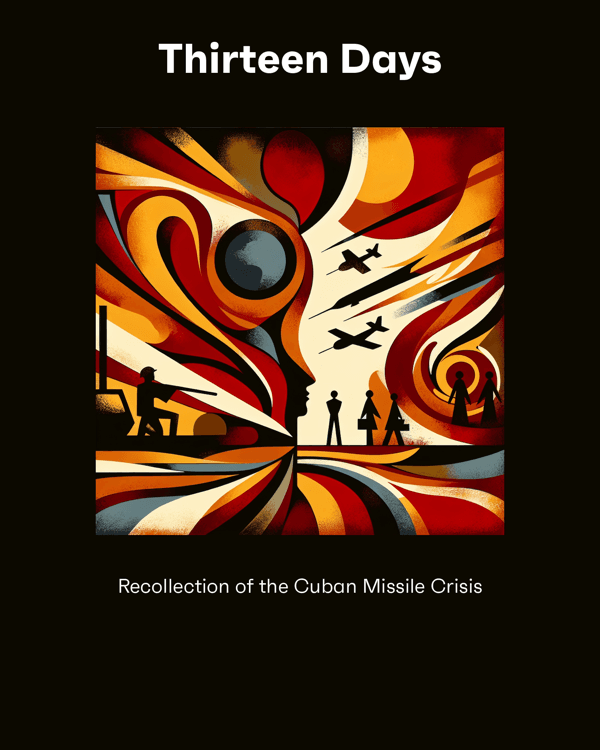
Robert F. Kennedy was a prominent American politician and a key figure in the Kennedy political dynasty. Serving as the U.S. attorney general under his brother, President John F. Kennedy, he played a significant role in the civil rights movement and later became a U.S. senator from New York. While Thirteen Days is his best-known book, he also authored To Seek a Newer World, in which he reflects on his personal and political beliefs.
On October 16, 1962, the discovery of Soviet missiles in Cuba by a U.S. U-2 spy plane thrust the world into a precarious standoff. This revelation starkly contradicted prior Soviet assurances, including personal commitments from Khrushchev to JFK, that Cuba would remain missile-free. In response, the ExComm group, comprising key advisors like RFK, Dean Rusk, and Robert McNamara, was formed to guide President Kennedy through the crisis. While McNamara advocated for a blockade as a controlled yet firm response, others pushed for immediate military action, including airstrikes, though doubts lingered about their sufficiency. By October 17, intelligence revealed the alarming presence of 16 missiles, nearly half of the Soviet Union’s intercontinental arsenal, positioned perilously close to the U.S., intensifying debates. Military leaders, led by General Curtis LeMay, pressed for swift action, but JFK hesitated, wary of Soviet retaliation. As strike plans were finalized by October 23, McNamara and RFK continued to favor a blockade, while Dean Acheson argued for a combined airstrike and invasion despite ethical concerns. Meanwhile, Soviet Foreign Minister Gromyko’s denial of offensive missile deployment clashed with U-2 evidence, escalating the diplomatic stakes. The world anxiously watched as leaders on both sides grappled with decisions that could determine the fate of humanity.
Pour lire le reste du livre, téléchargez
Bitely







 4 min
4 min 2 Bite
 Aperçu
 2 Bites