
Nature & Science
The World Without UsThe World Without Us

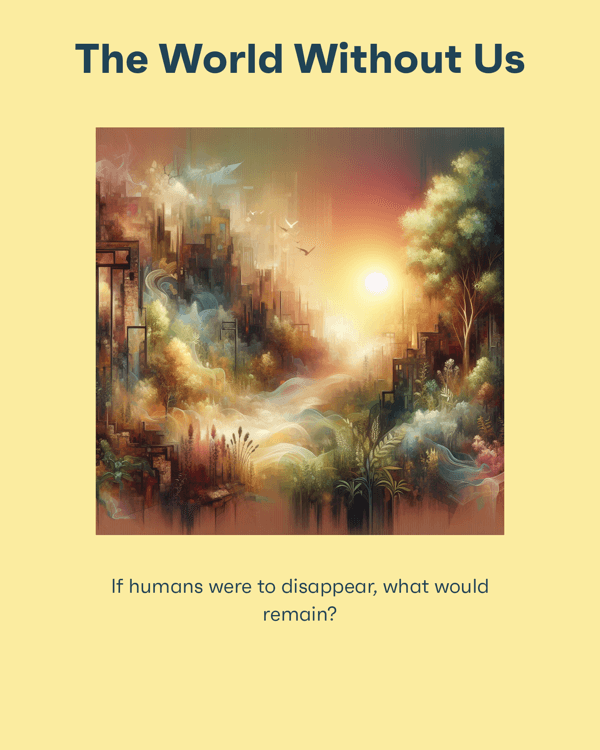
The World Without Us

user-icon

Alan Weisman

Humans have profoundly reshaped the environment, altering landscapes, depleting resources, and driving species to extinction, yet our influence is impermanent. In our absence, nature would reclaim its domain, erasing cities and structures reliant on human maintenance. Only the most durable creations, like stone carvings and objects made from noble metals, would endure as silent markers of our existence. While ecosystems would begin to heal, with endangered species recovering and predator-prey dynamics shifting, the environmental damage caused by human activity—such as nuclear disasters, plastic pollution, and heavy metal contamination—would persist for millennia. The long-term consequences of our actions, from the release of chlorofluorocarbons to the evolutionary impact on domesticated animals, reveal the enduring legacy of humanity’s brief yet transformative presence on Earth. The next section delves deeper into the environmental repercussions of nuclear power and other pollutants.

clock8 min
bite8 Bite
target Aperçu

De quoi s'agit-il ?

Humans have profoundly reshaped the planet, leaving a legacy of both innovation and destruction. This book explores the sweeping impact of human activity on the environment, from the enduring monuments we’ve built to the irreversible damage we’ve caused. It delves into the resilience of nature, the fragility of civilization, and the long-term consequences of our actions, offering a thought-provoking glimpse into a world without us. Through vivid examples and compelling insights, it examines how humanity’s presence has forever altered the Earth—and what might remain in our absence.

Résumé du livre

Alan Weisman is a US author and journalist. As a professor of international journalism at the University of Arizona he published the acclaimed article Earth Without People, which became the basis for The World Without Us.

Humans have profoundly reshaped the environment, altering landscapes, depleting resources, and driving species to extinction, yet our influence is impermanent. In our absence, nature would reclaim its domain, erasing cities and structures reliant on human maintenance. Only the most durable creations, like stone carvings and objects made from noble metals, would endure as silent markers of our existence. While ecosystems would begin to heal, with endangered species recovering and predator-prey dynamics shifting, the environmental damage caused by human activity—such as nuclear disasters, plastic pollution, and heavy metal contamination—would persist for millennia. The long-term consequences of our actions, from the release of chlorofluorocarbons to the evolutionary impact on domesticated animals, reveal the enduring legacy of humanity’s brief yet transformative presence on Earth. The next section delves deeper into the environmental repercussions of nuclear power and other pollutants.

Pour lire le reste du livre, téléchargez Bitely
appstoregoogleplayapp gallery
Toutes les bouchées
bite8 Bites

Plastic's Eternal Footprint: Humanity's Lasting Legacy

1
logo

Millennia of Pollution: Humanity's Lasting Legacy

2
logo

When Humans Vanish: The Fallout Unleashed

3
logo

When Humanity Fades, Nature Prevails

4
logo

Predators Unleashed: The Collapse of Domestication

5
logo

When Humans Vanish, Nature Reclaims

6
logo

Nature's Inevitable Triumph Over Human Creations

7
logo

Enduring Monuments: Humanity’s Timeless Imprints

8
logo

Livres associés

mailbox-icon

Voulez-vous continuer à apprendre ?

Ne manquez pas les mises à jour de l'univers passionnant de Bitely !