Résumé du livre
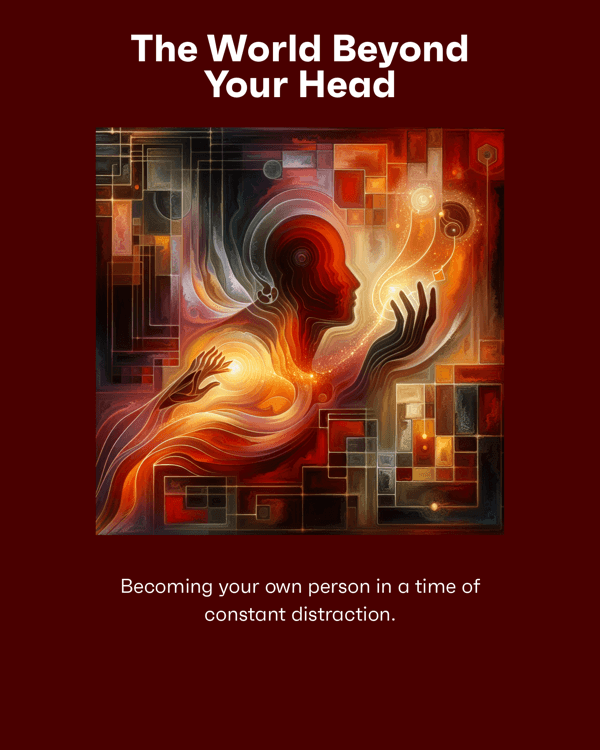
Matthew Crawford is a philosopher and motorcycle mechanic. He’s also a contributing editor at The New Atlantis and a senior fellow at the University of Virginia’s Institute for Advanced Studies in Culture.
As society becomes increasingly digital, our sense of identity and connection grows blurred, with shifting communication norms discouraging strong opinions and fostering conformity. This trend extends to professional environments, where ambiguous language often replaces accountability, and to parenting, where authority gives way to friendship. Kierkegaard criticized this "leveling" of individuality, emphasizing the value of distinct relationships like those between mentors and mentees. Education, rooted in the idea of being "guided out," is essential for personal growth but often clashes with modern ideals of independence. Structured learning environments that connect theory to real-world applications can reignite focus and engagement, which are crucial in a world overwhelmed by distractions. Similarly, manual skills and physical mastery offer fulfillment and counteract the passivity induced by technology. Yet, the modern craving for control, exacerbated by uncertainty and reliance on external systems, often leads to avoidance of social and professional challenges. This desire for control manifests in consumer behavior and even in the pursuit of simulated agency through activities like gaming. However, true focus and self-awareness remain vital for navigating life’s complexities, fostering creativity, and building meaningful connections. As online communication reshapes intimacy, the long-term effects on human relationships remain uncertain, highlighting the ongoing tension between control and unpredictability.
Pour lire le reste du livre, téléchargez
Bitely







 15 min
 9 Bite
 Aperçu
 9 Bites