Résumé du livre
Ben Rhodes is a former advisor and speechwriter for President Barack Obama and current cohost of the popular podcast Pod Save the World. He is a contributor to MSNBC and NBC News, as well as the author of the best-selling memoir The World As It Is.
During Obama’s presidency, the writer observed the rise of misinformation, particularly through Russian disinformation campaigns, which the U.S. struggled to counter effectively. The downing of a Malaysia Airlines flight in 2014 highlighted this issue, as Russia spread conflicting theories via state media and social platforms. Efforts to combat this, including a proposal for a U.S. state-funded media outlet, were thwarted by political opposition. Despite evidence of Russian interference in the 2016 election, bipartisan condemnation proved impossible, exposing vulnerabilities in American democracy. Meanwhile, the Arab Spring began with Mohamed Bouazizi’s self-immolation in Tunisia, sparking protests that spread to Egypt. Within Obama’s administration, opinions diverged on how to respond, with younger staff advocating for democratic reform and others favoring stability under Mubarak. Ultimately, Obama supported the protesters, leading to Mubarak’s resignation and revealing generational divides within his team. Amid global challenges, Obama’s efforts to normalize relations with Cuba stood out. Secret talks with Raúl Castro’s son, Alejandro, and Cuba’s decision to deny Edward Snowden entry demonstrated a commitment to diplomacy, culminating in a historic agreement facilitated by Pope Francis. As the 2016 election approached, Obama reflected on the surprising political climate, noting parallels between Trump’s anti-establishment appeal and his own earlier campaign against Clinton. Trump’s victory, fueled by misinformation and identity politics, seemed less shocking in hindsight. Obama’s first meeting with Trump revealed the latter’s fixation on crowd sizes and lack of policy commitment, prompting Obama to advise, “Find some high ground and prepare for the worst.” Throughout his presidency, Obama’s foreign policy emphasized diplomacy, notably with Iran, despite fierce opposition and misinformation campaigns. His team’s strategic efforts secured a nuclear deal, avoiding military conflict. Obama’s global outlook, shaped by his diverse upbringing and nuanced understanding of America’s role, often drew criticism domestically, as seen during his “Cairo speech,” which sought to reset relations with the Muslim world but faced backlash at home. Racial tensions also surfaced during his presidency, particularly after the Charleston church shooting, where Obama’s eulogy, centered on grace, resonated deeply. The Syrian civil war posed another major challenge, with Obama’s “red line” on chemical weapons leading to a diplomatic agreement with Russia rather than military intervention, reflecting the complexities of global conflict and the limits of U.S. influence.
Pour lire le reste du livre, téléchargez
Bitely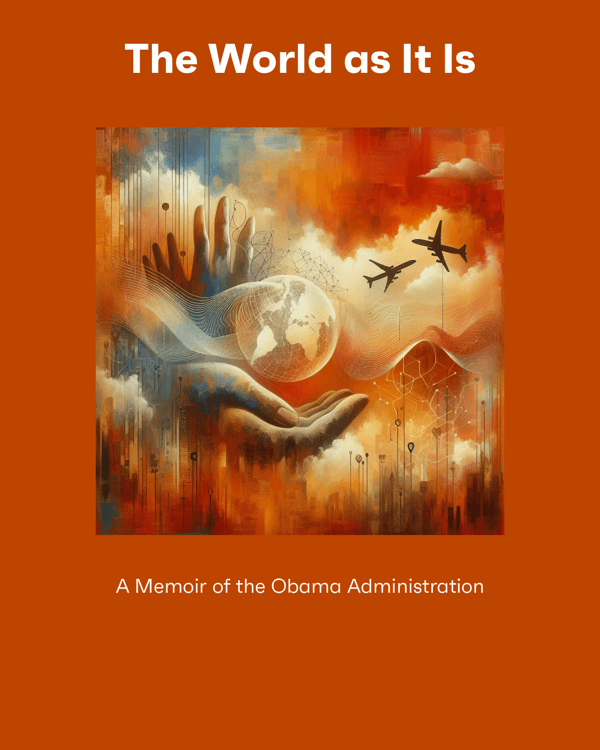

 20 min
 11 Bite
 Aperçu


 11 Bites