Résumé du livre
William Shakespeare was an English poet and playwright who lived at the height of the Renaissance. Hailed as the world’s greatest dramatist, he penned 38 plays and over 150 poems. His work has been translated into every major language and staged more often than that of any other playwright.
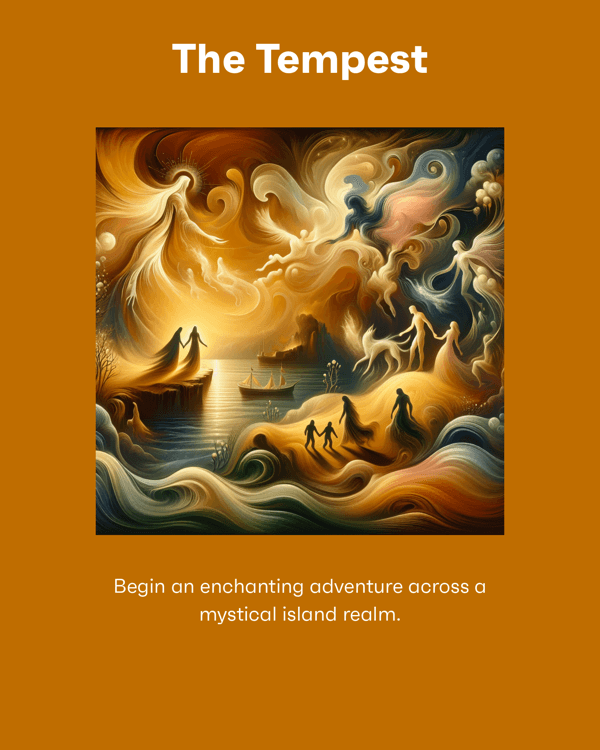
Prospero embraces Miranda and Ferdinand’s engagement and, with Ariel’s help, conjures a spectacular performance by the goddesses Ceres, Iris, and Juno to bless the couple with prosperity. The awe-inspiring vision is abruptly ended by Prospero, who reflects on life’s fleeting nature, likening it to a dream. Shifting focus to Caliban’s plot, Prospero learns from Ariel how the schemers were led through thorns and mud before being lured into a pool, where fine garments distracted Stephano and Trinculo. Despite Caliban’s protests, their fixation on the clothes leads to their downfall as Ariel summons hounds to chase them away, ending their plan to kill Prospero. Meanwhile, Ariel reports that Alonso and his companions are imprisoned and paralyzed with guilt. Prospero orders their release and, left alone, delivers a poignant monologue, vowing to renounce magic forever. Ariel returns with the nobles, whom Prospero confronts as traitors before forgiving them. He demands Antonio restore his dukedom, though Antonio remains defiant. Feigning shared grief, Prospero reveals Ferdinand and Miranda alive and engaged, delighting Alonso, who reconciles with Prospero. The group prepares to return to Naples for the wedding, with Ariel tasked to ensure safe passage. Through its intricate plots and theatrical spectacles, *The Tempest* examines themes of revenge, forgiveness, and storytelling, leaving audiences to question Prospero’s true motives and transformation.
Pour lire le reste du livre, téléchargez
Bitely







 8 min
8 min 4 Bite
 Aperçu
 4 Bites