Résumé du livre
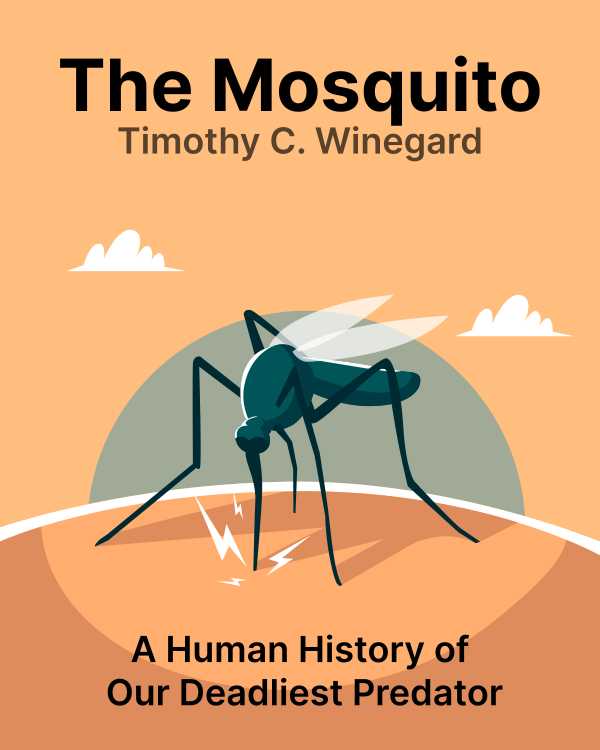
Timothy C. Winegard is a Canadian historian and author known for his work in the field of military history and indigenous studies. He has written books exploring topics related to warfare, military tactics, and the interactions between indigenous peoples and historical events. One of his notable works is "The First World Oil War," where he examines the role of oil in shaping the course of World War I.
Flourishing in damp, warm environments and serving as a vector for various deadly diseases like yellow fever and malaria, the mosquito has significantly influenced the course of human history for millennia. Its impact extends to shaping the outcomes of wars, empires, and military campaigns by incapacitating large numbers of soldiers. The mosquito's historical role includes contributing to events such as the European colonization of the Western hemisphere, the devastation of indigenous populations in the Americas, the perpetuation of enslaved African labor, and the rise of the United States as a global power. While substantial progress was made in the early and mid-twentieth century to combat mosquitoes and their diseases, they have experienced a resurgence since then. The future of the human-mosquito relationship remains uncertain, with the potential for genetic engineering to play a role in altering the insect's DNA.
“Blood type 0 seems to be the vintage of choice over types A and B or their blend. People with blood type 0 get bitten twice as often as those with type A, with type B falling somewhere in between.”
“History books tell us that the use of steel weapons and guns versus those fashioned of stone or wood safeguarded European victories. The real reason that European colonizers displaced or destroyed indigenous peoples, however, was largely a matter of disease and differing immunities.”
“Columbus was not even the first foreigner to discover the Americas. Columbus was, however, the first to open the doors permanently to the prevailing presence of Europeans, African slaves, and their diseases in their new world.”
Pour lire le reste du livre, téléchargez
Bitely









 28 min
 14 Bite
 Aperçu
 14 Bites