Résumé du livre
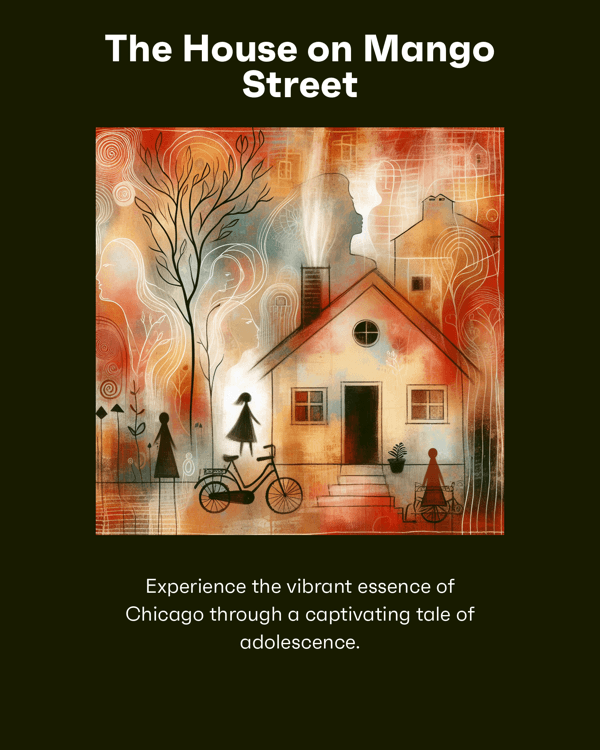
Sandra Cisneros is an internationally acclaimed poet and fiction writer known for her powerful storytelling, which often explores identity, gender, and race. Apart from The House on Mango Street, Cisneros has authored several other acclaimed works, including Woman Hollering Creek and Other Stories and Caramelo, both of which have also garnered significant attention and praise for their exploration of cultural identity and the female experience.
Esperanza’s journey on Mango Street begins with her first friend, Cathy, a self-proclaimed “queen of cats” who masks her poverty with fabricated tales of French nobility. Despite Cathy’s dismissive attitude toward their neighbors, Esperanza is drawn to the lively Rachel and Lucy, choosing to bond with them over a shared bicycle. Cathy soon moves away, blaming the arrival of more immigrants, and her house is taken over by Meme, an adventurous boy who breaks both arms imitating Tarzan. The basement is rented to a Puerto Rican family, including Marin, whose knowledge of adult topics fascinates the younger girls until she is sent away for being “troublesome.” Esperanza also shares Alicia’s story, a young woman balancing college aspirations with caring for her siblings, while enduring her father’s insistence that a woman’s place is in the kitchen. Through these experiences, Esperanza begins to explore the complexities of societal expectations and gender roles, moving beyond Cathy’s superficiality to form deeper connections with Rachel and Lucy. Observing the struggles of women like Marin and Alicia, she gains insight into the systemic inequalities and traditional constraints that shape their lives. As Esperanza grows, she confronts the blurred boundaries of childhood and womanhood, grappling with her changing body, the attention of boys, and unsettling encounters, including a traumatic moment at her first job. She observes the lives of women around her—Ruthie, who finds solace in children; Rafaela, confined by her husband; Mamacita, isolated from the world; and Minerva, trapped in an abusive marriage but finding brief reprieve in poetry. Esperanza’s emotions deepen as she experiences her first crush, witnesses her father’s grief, and reflects on the guilt of mocking her bedridden aunt, who once inspired her to see writing as a means of freedom. Her friendship with Sally exposes her to harsh realities of sexuality and violence, culminating in a sexual assault that leaves her determined to escape Mango Street. Through writing, Esperanza envisions a future where she can both liberate herself and return to help those unable to leave. Her family’s new house, though far from her dream home, becomes a backdrop for her exploration of identity, belonging, and the tension between hope and the constraints of her environment.
Pour lire le reste du livre, téléchargez
Bitely







 6 min
6 min 4 Bite
 Aperçu
 4 Bites