Résumé du livre
Angus Deaton, a professor at both Princeton University and the Woodrow Wilson School of Public and International Affairs, won the 2015 Nobel Prize in Economics. He is also the author of The Analysis of Household Surveys and Economics and Consumer Behaviour.
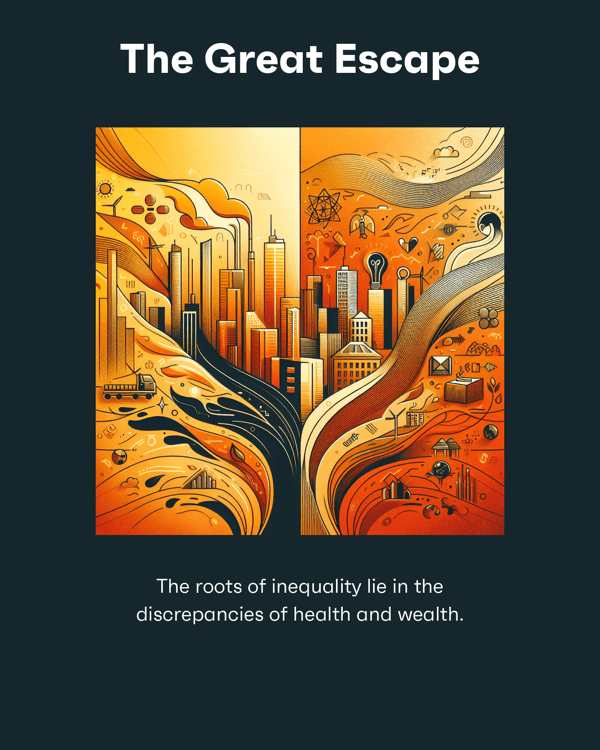
Inequality, both within and between nations, remains a pressing global issue. Historically, disparities were primarily between farmers and aristocrats, but the Enlightenment and Industrial Revolution reshaped societies, benefiting some nations while leaving others behind. Today, countries like the U.S. and parts of Europe thrive, while many in Africa and East Asia struggle with poverty and limited progress. Within affluent nations, wealth inequality persists, with the ultra-wealthy amassing disproportionate resources. Advances in healthcare and technology have extended life expectancy, though progress is slowing, especially among the elderly. Preventative measures, education, and improved living standards are increasingly recognized as essential for addressing health challenges. Globalization has facilitated innovation and economic growth, yet institutional weaknesses in many countries hinder their ability to capitalize on these advancements. While foreign aid has aimed to alleviate poverty, systemic issues like corruption and poor governance often undermine its effectiveness. Alternative strategies, such as fostering education, trade, and democratic processes, show greater promise. Despite ongoing challenges, global well-being has improved significantly, with advancements in healthcare, education, and living conditions transforming lives. However, stark disparities remain, highlighting the need for underdeveloped nations to adopt successful strategies from wealthier regions to bridge these gaps.
Pour lire le reste du livre, téléchargez
Bitely







 12 min
 8 Bite
 Aperçu
 8 Bites