Psychology
The Ego TrickThe Ego Trick

The Ego Trick

user-icon

Julian Baggini

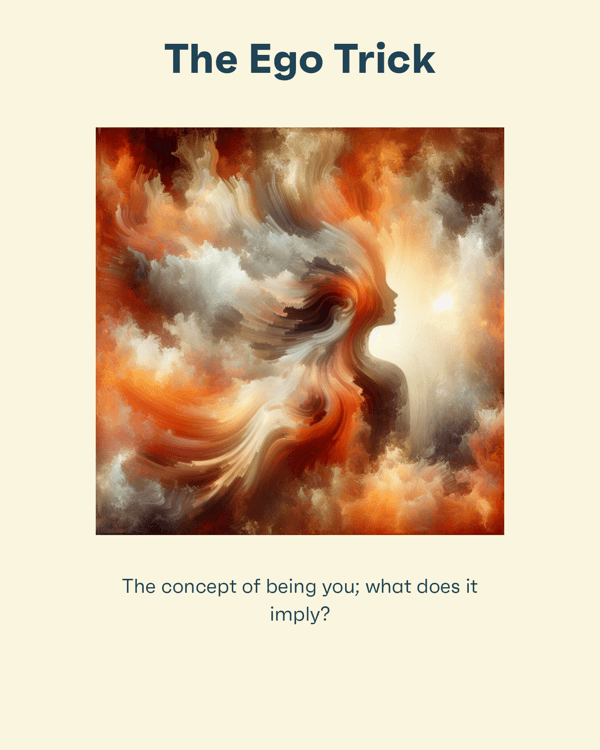
The concept of the soul and self has been explored across cultures, philosophies, and religions, often challenging the boundaries between physical existence and consciousness. Avicenna's "floating man" experiment suggests a self-awareness beyond the body, though its validity is questioned due to the mind's inability to fully separate from physical sensations. Similarly, Buddhist teachings on "non-self" reject the permanence of identity, proposing that selfhood is a construct shaped by transient experiences. This idea resonates with cases like Suzanne Segal's loss of identity, which she linked to spiritual awakening but was later attributed to neurological factors. Societal perception also plays a critical role in self-identity, as seen in Dru Marland's transition and the importance of being recognized as her true gender. Cultural differences further illustrate how selfhood varies, with Western individualism contrasting the Inuit's collective identity. Philosophers like David Hume argue that the self is an illusion, a fleeting collection of emotions and sensations, raising questions about free will and the nature of choice. These themes converge in cases like Robert B. Oxnam's dissociative identity disorder, where trauma fragmented his identity into multiple personas, demonstrating the mind's complex mechanisms for navigating and coping with reality.

clock10 min
bite7 Bite
target Aperçu

De quoi s'agit-il ?

The book delves into the profound and complex nature of the self, exploring philosophical, spiritual, and psychological perspectives across cultures and time. From Avicenna's thought experiment on consciousness to Buddhist notions of non-self, it examines how identity is shaped, questioned, and even dismantled. Through real-life accounts like Suzanne Segal's loss of identity and Robert B. Oxnam's dissociative identity disorder, the narrative weaves together science, philosophy, and personal experiences to challenge our understanding of free will, individuality, and the essence of being. It invites readers to reflect on the fluid and often elusive concept of the self in a deeply engaging way.

Résumé du livre

Julian Baggini is a British philosopher and founder of The Philosopher’s Magazine. He is also the author of the bestselling philosophical texts The Pig That Wants to be Eaten and Do They Think You’re Stupid?

The concept of the soul and self has been explored across cultures, philosophies, and religions, often challenging the boundaries between physical existence and consciousness. Avicenna's "floating man" experiment suggests a self-awareness beyond the body, though its validity is questioned due to the mind's inability to fully separate from physical sensations. Similarly, Buddhist teachings on "non-self" reject the permanence of identity, proposing that selfhood is a construct shaped by transient experiences. This idea resonates with cases like Suzanne Segal's loss of identity, which she linked to spiritual awakening but was later attributed to neurological factors. Societal perception also plays a critical role in self-identity, as seen in Dru Marland's transition and the importance of being recognized as her true gender. Cultural differences further illustrate how selfhood varies, with Western individualism contrasting the Inuit's collective identity. Philosophers like David Hume argue that the self is an illusion, a fleeting collection of emotions and sensations, raising questions about free will and the nature of choice. These themes converge in cases like Robert B. Oxnam's dissociative identity disorder, where trauma fragmented his identity into multiple personas, demonstrating the mind's complex mechanisms for navigating and coping with reality.

Pour lire le reste du livre, téléchargez Bitely

appstoregoogleplayapp gallery
Toutes les bouchées
bite7 Bites

When Identity Dissolves: A Journey Beyond Self

1
logo

Rethinking the Soul: Mind, Self, and Illusion

2
logo

Eleven Lives Within: Unraveling the Mind

3
logo

Identity Through Recognition and Cultural Lens

4
logo

Illusions of Identity: The Self Unveiled

5
logo

Redefining Self: Illusions, Choices, and Identity

6
logo

The Illusion of Choice and Free Will

7
logo

Livres associés

mailbox-icon

Voulez-vous continuer à apprendre ?

Ne manquez pas les mises à jour de l'univers passionnant de Bitely !