Self-Growth
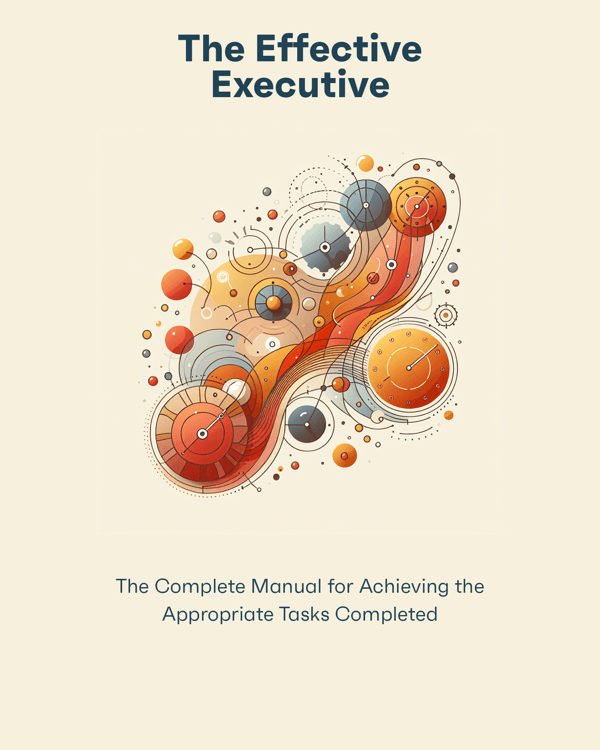
The Effective ExecutiveThe Effective Executive

The Effective Executive

user-icon

Peter F. Drucker

Time is the most limited resource for executives, making its effective management crucial. Tools like time diaries can reveal discrepancies between perceived and actual time use, emphasizing the need for deliberate allocation. Poorly considered decisions often waste time, highlighting the importance of patience and thoughtful planning. Streamlining schedules by cutting unnecessary social engagements and meetings can reclaim valuable hours, as shown by a CEO who realized dining out nightly was unnecessary. Meetings should be concise, purposeful, and involve only relevant participants with the capacity to contribute. Decision-making hinges on evaluating whether action is necessary and if its benefits outweigh risks. Leaders must also adapt to changing circumstances, as Franklin D. Roosevelt did when shifting from a balanced budget to economic reform during the Great Depression. However, making decisions is only part of the challenge—ensuring their implementation requires clear responsibilities and accountability. Without these, even the best decisions risk falling flat.

clock9 min
bite6 Bite
target Aperçu

De quoi s'agit-il ?

Time is the most finite resource for executives, making its management a critical skill. This section explores how tools like time diaries can reveal discrepancies between perception and reality, helping leaders allocate their time more effectively. It delves into strategies for streamlining schedules, making thoughtful decisions, and adapting to changing circumstances, using historical examples like Franklin D. Roosevelt’s economic pivot. With a focus on accountability and implementation, it underscores the importance of deliberate action in leadership and decision-making.

Résumé du livre

Peter F. Drucker (1909–2005) was an Austrian-American management consultant, teacher, author, and cofounder of the Peter F. Drucker Foundation for Nonprofit Management. He was a columnist for the Wall Street Journal for ten years and regularly wrote for the Economist and Harvard Business Review. In total, he wrote 34 books that have been published in over 70 languages. These include The Practice of Management, which was voted the third most influential management book of the twentieth century by fellows of the Academy of Management.

Time is the most limited resource for executives, making its effective management crucial. Tools like time diaries can reveal discrepancies between perceived and actual time use, emphasizing the need for deliberate allocation. Poorly considered decisions often waste time, highlighting the importance of patience and thoughtful planning. Streamlining schedules by cutting unnecessary social engagements and meetings can reclaim valuable hours, as shown by a CEO who realized dining out nightly was unnecessary. Meetings should be concise, purposeful, and involve only relevant participants with the capacity to contribute. Decision-making hinges on evaluating whether action is necessary and if its benefits outweigh risks. Leaders must also adapt to changing circumstances, as Franklin D. Roosevelt did when shifting from a balanced budget to economic reform during the Great Depression. However, making decisions is only part of the challenge—ensuring their implementation requires clear responsibilities and accountability. Without these, even the best decisions risk falling flat.

Pour lire le reste du livre, téléchargez Bitely

appstoregoogleplayapp gallery
Toutes les bouchées
bite6 Bites

Shaping Leadership Through Self-Awareness and Growth

1
logo

Mastering Decision-Making and Team Collaboration

2
logo

Mastering Decisions: From Strategy to Execution

3
logo

Mastering Leadership: Decisions, Growth, and Collaboration

4
logo

Mastering Time: The Key to Executive Success

5
logo

Mastering Leadership Through Collaboration and Growth

6
logo

Livres associés

mailbox-icon

Voulez-vous continuer à apprendre ?

Ne manquez pas les mises à jour de l'univers passionnant de Bitely !