
Nature & Science
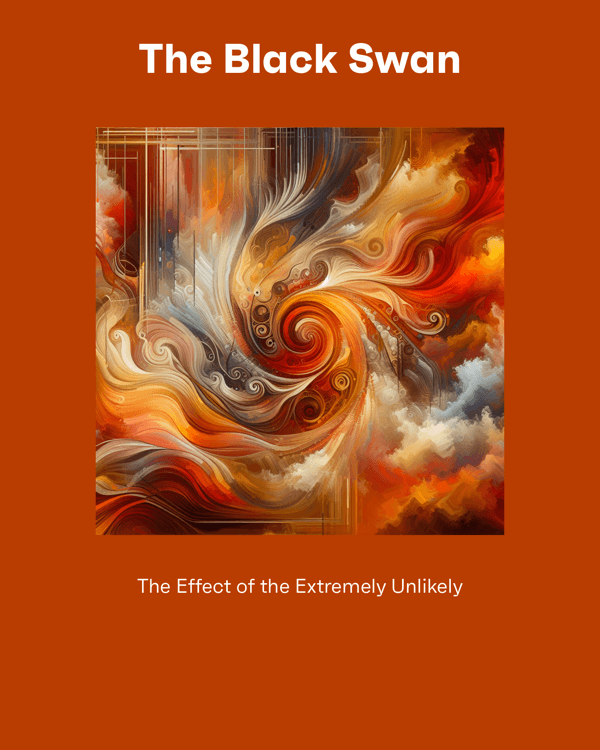
The Black SwanThe Black Swan

The Black Swan

user-icon

Nassim Nicholas Taleb

We strive to safeguard ourselves by evaluating risks and making informed decisions, such as purchasing insurance or diversifying resources, aiming to balance protection with opportunity. However, our confidence in predicting risks often exceeds reality, a cognitive error known as the ludic fallacy, where we treat risk as predictable and rule-bound. This flawed mindset leaves us vulnerable to unforeseen events, as seen in casinos, which, despite meticulous planning, remain exposed to unpredictable threats like employee misconduct. Recognizing the limits of our understanding and the unpredictability of the world is crucial. By acknowledging cognitive biases and the human tendency to oversimplify through narratives, we can adopt broader perspectives and make more balanced decisions. While randomness and complexity cannot be fully controlled, self-awareness and preparation can help mitigate their impact, fostering wiser choices and reducing the harm of ignorance.

clock11 min
bite8 Bite
target Aperçu

De quoi s'agit-il ?

Understanding the unpredictable nature of the world is at the heart of this exploration into risk, decision-making, and human cognition. This book delves into the cognitive biases and flawed assumptions that shape our perceptions, from overconfidence in predicting risks to the oversimplification of complex events. By examining concepts like the ludic fallacy, scalable versus non-scalable information, and the pitfalls of causal narratives, it challenges readers to rethink how they interpret and respond to uncertainty. With engaging examples and thought-provoking insights, it offers tools to navigate the unknown and make more informed, balanced choices.

Résumé du livre

Nassim Nicholas Taleb is an academic and author of bestselling works such as The Black Swan and Fooled by Randomness. He has devoted his life to studying the cause and effects of uncertainty and probability. He is currently Distinguished Professor of Risk Engineering at New York University’s Polytechnic Institute.

We strive to safeguard ourselves by evaluating risks and making informed decisions, such as purchasing insurance or diversifying resources, aiming to balance protection with opportunity. However, our confidence in predicting risks often exceeds reality, a cognitive error known as the ludic fallacy, where we treat risk as predictable and rule-bound. This flawed mindset leaves us vulnerable to unforeseen events, as seen in casinos, which, despite meticulous planning, remain exposed to unpredictable threats like employee misconduct. Recognizing the limits of our understanding and the unpredictability of the world is crucial. By acknowledging cognitive biases and the human tendency to oversimplify through narratives, we can adopt broader perspectives and make more balanced decisions. While randomness and complexity cannot be fully controlled, self-awareness and preparation can help mitigate their impact, fostering wiser choices and reducing the harm of ignorance.

Pour lire le reste du livre, téléchargez Bitely
appstoregoogleplayapp gallery
Toutes les bouchées
bite8 Bites

Breaking Free from the Illusion of Certainty

1
logo

When the Unpredictable Redefines Everything

2
logo

Breaking Free from Cognitive Traps

3
logo

Breaking the Illusion: How We Misinterpret Reality

4
logo

Decoding Scalable vs. Non-Scalable Data

5
logo

Mastering Risk: Embracing Uncertainty for Smarter Decisions

6
logo

Mastering Uncertainty: The Power of Knowing Less

7
logo

Mastering Uncertainty: Outsmarting Cognitive Biases

8
logo

Livres associés

mailbox-icon

Voulez-vous continuer à apprendre ?

Ne manquez pas les mises à jour de l'univers passionnant de Bitely !