
Self-Growth
SwitchSwitch

Switch

user-icon

Chip Heath & Dan Heath

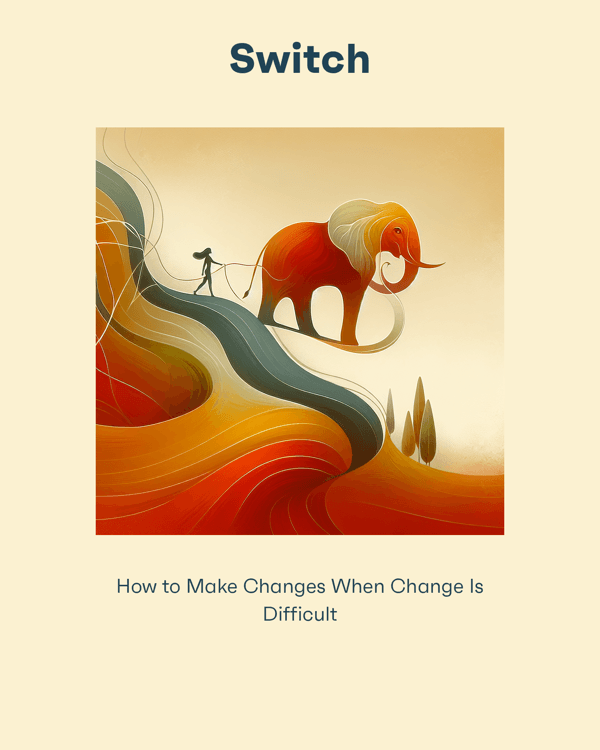
To drive meaningful change, it’s crucial to address both the rational and emotional aspects of decision-making. While logical reasoning can guide the "rider," the emotional "elephant" requires motivation through powerful feelings, whether positive or negative. Environmental factors also play a significant role in shaping behavior, as seen in examples like U.S. soldiers overcoming addiction after returning home or Paul Butler’s campaign to save the St. Lucia parrot by tying its protection to national pride. Habits, which operate on autopilot, are another essential element of change, and their formation can be supported by shaping the environment and using tools like action triggers and checklists. Additionally, aligning change with personal identity and fostering a growth mindset helps individuals embrace challenges, learn from setbacks, and stay committed to progress. By creating a clear, supportive path and leveraging emotional and situational factors, change becomes both achievable and sustainable.

clock13 min
bite8 Bite
target Aperçu

De quoi s'agit-il ?

This book explores the intricate dynamics of personal and organizational change, emphasizing the interplay between logic, emotion, and environment. It delves into the challenges of decision paralysis, the power of small wins, and the role of identity in driving transformation. Through compelling real-world examples—from combating malnutrition in Vietnam to saving an endangered parrot in St. Lucia—it reveals how clear goals, emotional triggers, and well-designed environments can inspire lasting progress. With practical insights and actionable strategies, it offers a roadmap for overcoming resistance and achieving meaningful change.

Résumé du livre

Chip Heath is a professor of organizational behavior at Stanford University, and his brother Dan Heath is a senior fellow at Duke University. They have co-authored two other bestsellers: Made to Stick and Decisive.

To drive meaningful change, it’s crucial to address both the rational and emotional aspects of decision-making. While logical reasoning can guide the "rider," the emotional "elephant" requires motivation through powerful feelings, whether positive or negative. Environmental factors also play a significant role in shaping behavior, as seen in examples like U.S. soldiers overcoming addiction after returning home or Paul Butler’s campaign to save the St. Lucia parrot by tying its protection to national pride. Habits, which operate on autopilot, are another essential element of change, and their formation can be supported by shaping the environment and using tools like action triggers and checklists. Additionally, aligning change with personal identity and fostering a growth mindset helps individuals embrace challenges, learn from setbacks, and stay committed to progress. By creating a clear, supportive path and leveraging emotional and situational factors, change becomes both achievable and sustainable.

Pour lire le reste du livre, téléchargez Bitely
appstoregoogleplayapp gallery
Toutes les bouchées
bite8 Bites

Unlocking Change: Focus on Bright Spots

1
logo

Clear Steps to Conquer Decision Paralysis

2
logo

Motivating Change: Clear Goals and Emotional Drive

3
logo

Inspire Action by Guiding Emotions

4
logo

Small Wins, Big Changes: Guiding Progress

5
logo

Transforming Change Through Identity and Growth

6
logo

Designing Paths That Drive Lasting Change

7
logo

Harnessing Habits: Shaping Change Through Environment

8
logo

Livres associés

mailbox-icon

Voulez-vous continuer à apprendre ?

Ne manquez pas les mises à jour de l'univers passionnant de Bitely !