Résumé du livre
Maryanne Wolf received her PhD in Human Development and Psychology from Harvard University Graduate School of Education, where she continues her research on the neurological basis of reading, language, and dyslexia.
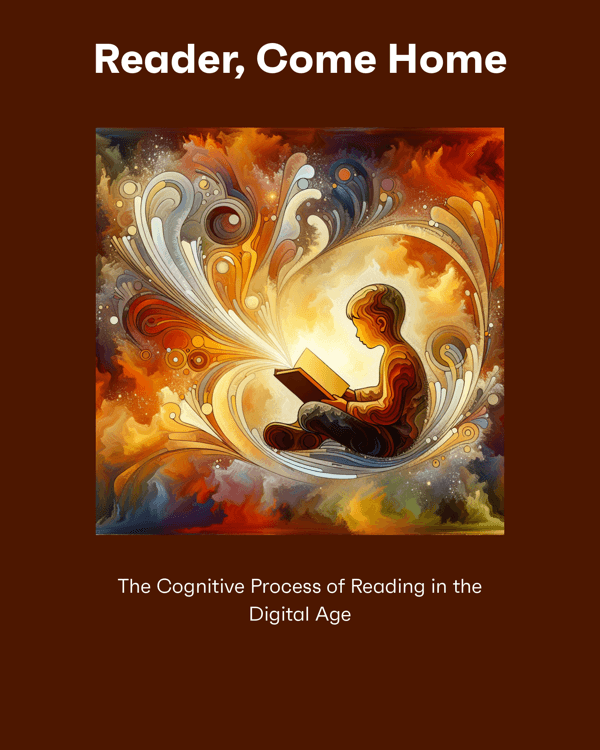
Multitasking has become increasingly common as our brains are naturally drawn to novelty, activating reward centers when switching tasks. However, this preference for instant gratification contrasts with the deeper satisfaction of sustained focus, a skill requiring patience and practice. Children, whose prefrontal cortex is still developing, struggle even more with self-control and delaying gratification, a challenge worsened by the overstimulation of digital devices. Neuroscientists warn that this constant exposure to competing stimuli can lead to stress, anxiety, and dependency on heightened stimulation levels. With children spending significant hours daily on digital devices, the concern grows over how to protect their cognitive and emotional well-being. As the digital age reshapes reading habits, the decline in deep reading—characterized by immersive, reflective engagement—threatens critical skills like empathy and perspective-taking. Balancing the benefits of both digital and print mediums is essential, especially for young learners. Physical books foster sustained attention and independent thinking, while digital tools like coding promote sequential reasoning and creativity. Parental involvement, such as reading aloud, remains vital for early literacy, creating emotional bonds and strengthening language skills. However, literacy challenges persist, with poor reading proficiency linked to broader societal issues, including school dropout rates and incarceration. Addressing these challenges requires better support at home and school, particularly during pivotal stages like fourth grade, where increased academic demands often leave struggling students behind.
“Reading changes our lives, and our lives change our reading.”
“Learning to read begins the first time an infant is held and read a story.”
“Biologically and intellectually, reading allows the species to go “beyond the information given” to create endless thoughts most beautiful and wonderful.”
Pour lire le reste du livre, téléchargez
Bitely








 15 min
 8 Bite
 Aperçu
 8 Bites