Nature & Science
PsychPsych

Psych

user-icon

Paul Bloom

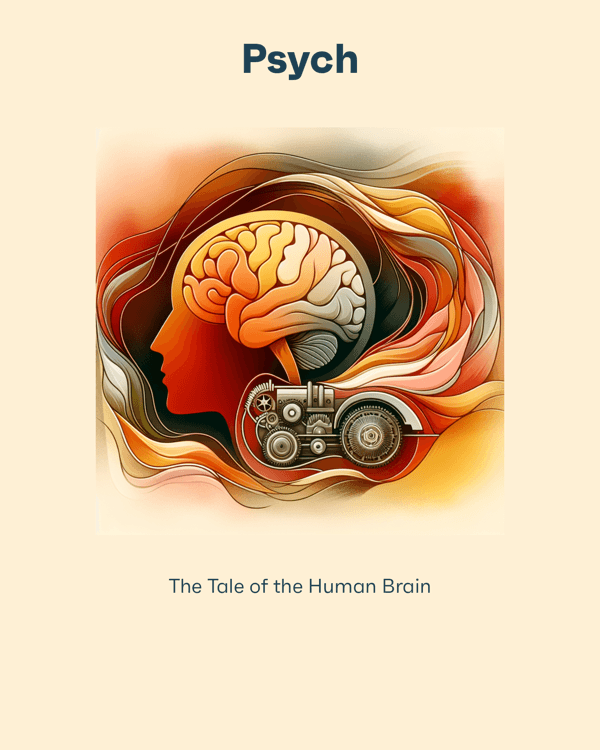
Bloom uses the analogy of a car needing repairs to illustrate the relationship between neuroscience and psychology, comparing the physicist’s understanding of materials to neuroscience’s insights into brain structure, and the mechanic’s focus on functionality to psychology’s exploration of cognition and behavior. Historically, debates about the body’s influence on thought have evolved into detailed mappings of brain functions, yet neuroscience still grapples with the "hard problem" of consciousness, a concept central to modern psychological research due to its undeniable role in shaping ethics and self-awareness. Studies reveal tendencies like overestimating abilities, rationalizing behavior, and attributing actions to character rather than circumstance, highlighting biases that can be mitigated through structured measures like blind hiring. Research on human motivations, such as Thorndike’s 1937 study on the value of unpleasant experiences, underscores the complexity of decision-making influenced by biological, emotional, and cultural factors. The nature versus nurture debate, exemplified by nativism and empiricism, frames discussions of human development, with Piaget’s stages of childhood growth and Carey’s "child-as-scientist" model offering insights into how early experiences shape behavior. These ideas set the stage for exploring the intricacies of adult motivation.

clock6 min
bite4 Bite
target Aperçu

De quoi s'agit-il ?

This book delves into the fascinating interplay between neuroscience and psychology, exploring how our brains shape thoughts, behaviors, and self-awareness. Through engaging analogies and groundbreaking studies, it examines the mysteries of consciousness, human motivation, and the biases that influence our decisions. From the developmental stages of childhood to the complexities of adult behavior, the narrative offers a thought-provoking journey into what drives us and how we perceive the world. Perfect for readers curious about the science behind human nature, it bridges philosophical questions with modern psychological research.

Résumé du livre

Paul Bloom, a psychologist of Canadian-American descent, investigates the ways in which both children and adults comprehend the physical and social aspects of the world. His specific areas of focus include language, morality, religion, fiction, and art.

Bloom uses the analogy of a car needing repairs to illustrate the relationship between neuroscience and psychology, comparing the physicist’s understanding of materials to neuroscience’s insights into brain structure, and the mechanic’s focus on functionality to psychology’s exploration of cognition and behavior. Historically, debates about the body’s influence on thought have evolved into detailed mappings of brain functions, yet neuroscience still grapples with the "hard problem" of consciousness, a concept central to modern psychological research due to its undeniable role in shaping ethics and self-awareness. Studies reveal tendencies like overestimating abilities, rationalizing behavior, and attributing actions to character rather than circumstance, highlighting biases that can be mitigated through structured measures like blind hiring. Research on human motivations, such as Thorndike’s 1937 study on the value of unpleasant experiences, underscores the complexity of decision-making influenced by biological, emotional, and cultural factors. The nature versus nurture debate, exemplified by nativism and empiricism, frames discussions of human development, with Piaget’s stages of childhood growth and Carey’s "child-as-scientist" model offering insights into how early experiences shape behavior. These ideas set the stage for exploring the intricacies of adult motivation.

“Love is a gross exaggeration of the difference between one person and everybody else.”

“If you suffer for something that gives delight, soon the suffering itself can give joy.”

“A meaningful life, at least to some extent, has to do with what one does and how one affects people.”

Pour lire le reste du livre, téléchargez Bitely

appstoregoogleplayapp gallery
Toutes les bouchées
bite4 Bites

Decoding Minds: The Intersection of Psychology and Neuroscience

1
logo

Decoding Human Growth: Nature, Nurture, and Development

2
logo

Pricing Pain: Unveiling Human Motivation

3
logo

Challenging Bias: Understanding Human Perception and Judgment

4
logo

Livres associés

mailbox-icon

Voulez-vous continuer à apprendre ?

Ne manquez pas les mises à jour de l'univers passionnant de Bitely !