Economy & Finance
Phishing for PhoolsPhishing for Phools

Phishing for Phools

user-icon

George A. Akerlof and Robert J. Shiller

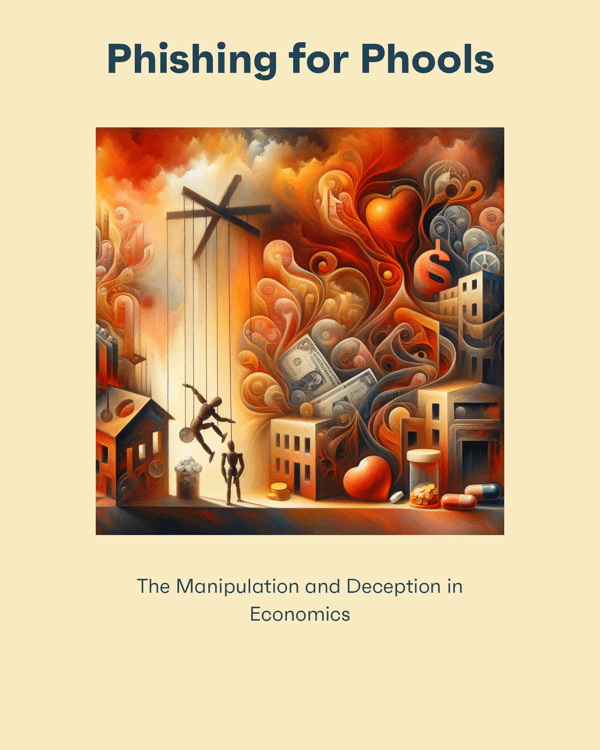
The 2008 financial crisis, marked by a housing market collapse, highlights the concept of reputation mining, where trusted entities exploit their credibility for profit, as seen with credit rating agencies favoring risky financial products for banks. This reflects a broader pattern of deception in free markets, where rational decision-making often gives way to manipulation. From grocery store layouts to cake mix marketing, businesses exploit consumer vulnerabilities, while sectors like healthcare and democracy also reveal the dangers of incomplete information, as with the Vioxx scandal or voter manipulation during the Emergency Economic Stabilization Act. Advertising and payment methods further illustrate phishing, with tactics like credit card promotions encouraging overspending. Defenses like standardization and legal protections aim to counteract such practices, yet some innovations, like United Airlines’ status tiers or the cigarette-rolling machine, show how progress can also exploit human tendencies. These examples underscore the pervasive nature of phishing across industries, challenging the ideal of truly rational markets.

clock8 min
bite6 Bite
target Aperçu

De quoi s'agit-il ?

This book delves into the hidden mechanisms of deception that thrive in free-market systems, illustrating how individuals and institutions exploit trust, information gaps, and psychological vulnerabilities for personal gain. Through vivid examples spanning finance, retail, healthcare, and even democracy, it uncovers the tactics used to manipulate decisions and maximize profits at the expense of others. By exploring the intersection of innovation, human behavior, and economic systems, the narrative challenges the notion of rational markets, offering a thought-provoking examination of the forces shaping our choices.

Résumé du livre

Nobel laureate George A. Akerlof is an economist and professor at Georgetown University. He was awarded the Nobel Prize in economics in 2001.

The 2008 financial crisis, marked by a housing market collapse, highlights the concept of reputation mining, where trusted entities exploit their credibility for profit, as seen with credit rating agencies favoring risky financial products for banks. This reflects a broader pattern of deception in free markets, where rational decision-making often gives way to manipulation. From grocery store layouts to cake mix marketing, businesses exploit consumer vulnerabilities, while sectors like healthcare and democracy also reveal the dangers of incomplete information, as with the Vioxx scandal or voter manipulation during the Emergency Economic Stabilization Act. Advertising and payment methods further illustrate phishing, with tactics like credit card promotions encouraging overspending. Defenses like standardization and legal protections aim to counteract such practices, yet some innovations, like United Airlines’ status tiers or the cigarette-rolling machine, show how progress can also exploit human tendencies. These examples underscore the pervasive nature of phishing across industries, challenging the ideal of truly rational markets.

Pour lire le reste du livre, téléchargez Bitely

appstoregoogleplayapp gallery
Toutes les bouchées
bite6 Bites

Exploiting Trust: How Markets Manipulate Choices

1
logo

Phishing for Profit: How Reputation Crumbled

2
logo

Phishing Minds: How Ads and Payments Manipulate Choices

3
logo

Manipulated Choices: How Deception Shapes Decisions

4
logo

Phishing Innovations: How Industries Exploit Vulnerabilities

5
logo

Exposing Deception: How Markets Exploit Trust

6
logo

Livres associés

mailbox-icon

Voulez-vous continuer à apprendre ?

Ne manquez pas les mises à jour de l'univers passionnant de Bitely !