Résumé du livre
Peter Godfrey-Smith has a PhD in philosophy from the University of California, San Diego. He currently teaches at both the City University of New York and the University of Sydney, where he specializes in the philosophy of history and biology. His previous book, Darwinian Populations and Natural Selection, was awarded the 2010 Lakatos Award for an outstanding work on the philosophy of science.
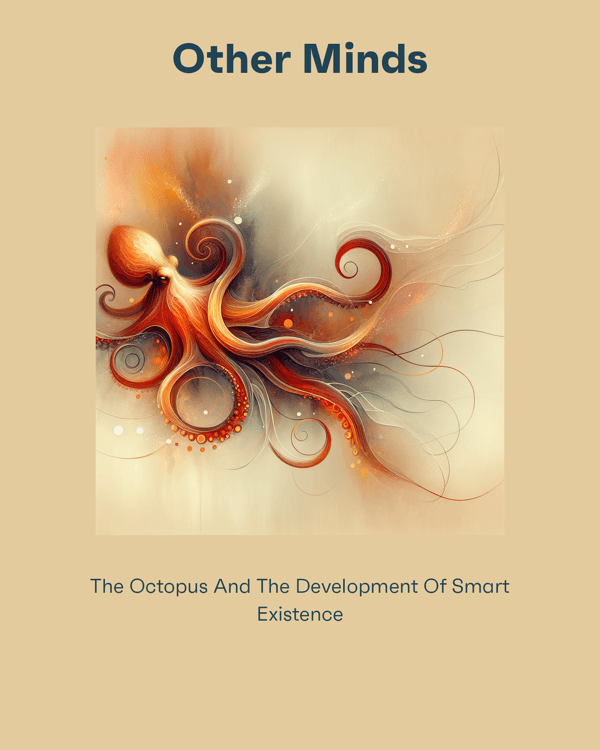
Octopuses, once shell-covered mollusks with a single foot for movement, evolved over millions of years into agile predators with grasping arms, shedding their shells to swim and propel themselves through water with remarkable precision. Their ability to change color for camouflage, despite an apparent inability to perceive color, highlights the autonomy of their skin, which can adapt even when detached from their bodies. While many scientists argue that octopuses and other animals lack consciousness and process stimuli unconsciously, the author observes behaviors in octopuses that suggest curiosity and pleasure, hinting at a form of awareness. The brief lifespans of octopuses, shaped by their vulnerable, shell-less bodies and reproductive habits, contrast with their complex behaviors. Similarly, unicellular organisms like E. coli and bioluminescent bacteria demonstrate surprising coordination and social behavior, which played a pivotal role in the evolution of multicellular life. The debate about whether language is essential for complex thought remains unresolved, as studies on animals like jays reveal sophisticated cognition without formal communication systems. Next, the focus returns to the fascinating octopus, a creature that continues to captivate scientists and divers alike.
Pour lire le reste du livre, téléchargez
Bitely







 9 min
9 min 6 Bite
 Aperçu
 6 Bites