
Leadership & Entrepreneurship
Moore’s LawMoore’s Law

Moore’s Law

user-icon

Arnold Thackray, David Brock and Rachel Jones

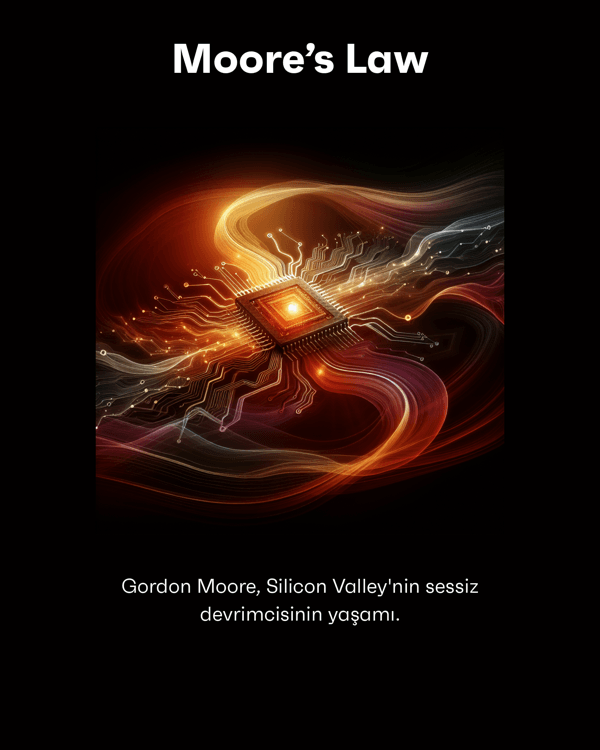
In 1968, Gordon Moore and Bob Noyce launched a transformative venture that reshaped computing by identifying untapped markets rather than competing with industry giants. Their breakthrough came with the development of Intel's 1101 memory microchip, designed by Joel Karp, which revolutionized data storage. This success attracted Dov Frohman, whose reprogrammable EPROM chips became a major revenue source for Intel from 1972 to 1985. As computers became integral to daily life, Intel shifted focus entirely to microprocessors, dominating the market by the mid-1990s. Moore retired in 2001, leaving behind a legacy of innovation and philanthropy, while Moore's Law, his famous prediction about microchip advancement, approached its physical limits, awaiting the next visionary to redefine technology.

clock18 min
bite10 Bite
target Aperçu

De quoi s'agit-il ?

Gordon Moore, the visionary behind Moore's Law, revolutionized the world of computing through his groundbreaking innovations and foresight. From his early fascination with chemistry and experimentation to co-founding Intel, Moore consistently pushed the boundaries of technology. His pivotal contributions, including the development of microchips and microprocessors, transformed industries and reshaped modern life. Beyond his scientific achievements, Moore's legacy extends to his philanthropy, where he dedicated his later years to advancing education and scientific research.

Résumé du livre

Arnold Thackray is a writer and the CEO of the Chemical Heritage Foundation. David Brock is a world-renowned expert on electronics. Rachel Jones, a journalist, specializes in technology and entrepreneurship.

In 1968, Gordon Moore and Bob Noyce launched a transformative venture that reshaped computing by identifying untapped markets rather than competing with industry giants. Their breakthrough came with the development of Intel's 1101 memory microchip, designed by Joel Karp, which revolutionized data storage. This success attracted Dov Frohman, whose reprogrammable EPROM chips became a major revenue source for Intel from 1972 to 1985. As computers became integral to daily life, Intel shifted focus entirely to microprocessors, dominating the market by the mid-1990s. Moore retired in 2001, leaving behind a legacy of innovation and philanthropy, while Moore's Law, his famous prediction about microchip advancement, approached its physical limits, awaiting the next visionary to redefine technology.

Pour lire le reste du livre, téléchargez Bitely
appstoregoogleplayapp gallery
Toutes les bouchées
bite10 Bites

Gordon Moore: Igniting a Revolution in Science

1
logo

Forging Innovation: Gordon Moore’s Path to Discovery

2
logo

From Explosives to Innovation: Gordon Moore's Journey

3
logo

Revolutionizing Technology: Gordon Moore’s Silicon Breakthrough

4
logo

Revolutionizing Tech: Gordon Moore’s Bold Breakthrough

5
logo

How Gordon Moore Revolutionized Modern Electronics

6
logo

Revolutionizing Computing: Gordon Moore's Legacy

7
logo

Lessons in Innovation: Gordon Moore's Bold Missteps

8
logo

Intel's Microprocessor Revolution: Redefining Computing

9
logo

How Gordon Moore Revolutionized Modern Computing

10
logo

Livres associés

mailbox-icon

Voulez-vous continuer à apprendre ?

Ne manquez pas les mises à jour de l'univers passionnant de Bitely !