Self-Growth
MessyMessy

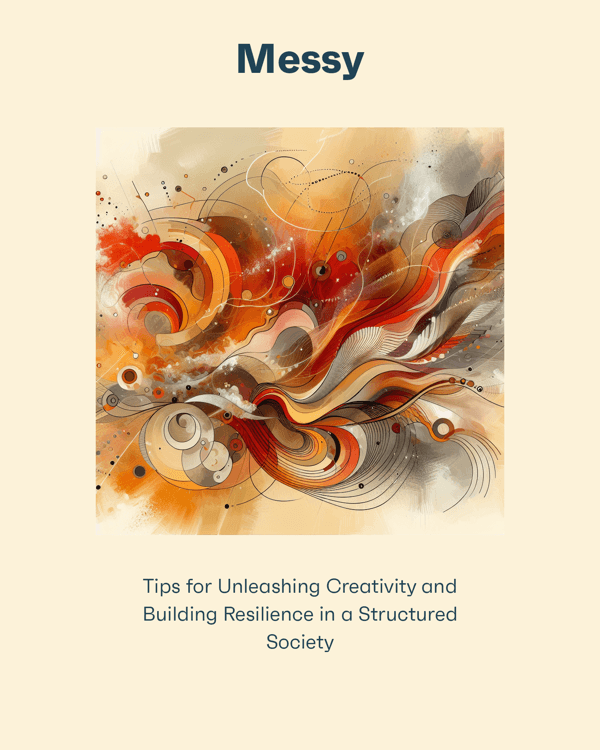
Messy

user-icon

Tim Harford

Our growing reliance on automation, from storing phone numbers to piloting planes, has diminished our adaptability and left us vulnerable to unforeseen challenges. To counter this, we must embrace unpredictability and flexibility, as excessive order can stifle creativity and efficiency. Paul Erdös exemplified the power of diverse collaboration, supported by the theory of weak ties, which fosters innovation through varied perspectives. Similarly, environments like Google’s, where employees can personalize their spaces, encourage creativity by empowering individuals. While big data promises better predictions, it often introduces noise and biases, highlighting the risks of over-measuring. History shows that unstructured systems, like Silicon Valley’s open culture, outperform rigid ones, as seen in its contrast with Route 128. Disruptions, distractions, and improvisation also spark innovation, from Keith Jarrett’s improvised piano performance to Martin Luther King Jr.’s iconic “I have a dream” speech. These examples reveal that creativity thrives when order is loosened, routines are broken, and spontaneity is embraced.

clock6 min
bite5 Bite
target Aperçu

De quoi s'agit-il ?

Our growing reliance on automation has diminished our ability to adapt to unforeseen challenges, from everyday tasks to critical situations like aviation emergencies. This book explores how embracing unpredictability and fostering creativity can lead to greater innovation and resilience. Drawing on examples from diverse fields—mathematics, technology, music, and social movements—it highlights the power of collaboration, flexible environments, and improvisation. By examining the balance between structure and spontaneity, it offers insights into unlocking human potential in an increasingly automated world.

Résumé du livre

Tim Harford is an economist and award-winning journalist who writes for the Financial Times. He has written multiple bestselling books on economics and life, including The Undercover Economist.

Our growing reliance on automation, from storing phone numbers to piloting planes, has diminished our adaptability and left us vulnerable to unforeseen challenges. To counter this, we must embrace unpredictability and flexibility, as excessive order can stifle creativity and efficiency. Paul Erdös exemplified the power of diverse collaboration, supported by the theory of weak ties, which fosters innovation through varied perspectives. Similarly, environments like Google’s, where employees can personalize their spaces, encourage creativity by empowering individuals. While big data promises better predictions, it often introduces noise and biases, highlighting the risks of over-measuring. History shows that unstructured systems, like Silicon Valley’s open culture, outperform rigid ones, as seen in its contrast with Route 128. Disruptions, distractions, and improvisation also spark innovation, from Keith Jarrett’s improvised piano performance to Martin Luther King Jr.’s iconic “I have a dream” speech. These examples reveal that creativity thrives when order is loosened, routines are broken, and spontaneity is embraced.

Pour lire le reste du livre, téléchargez Bitely

appstoregoogleplayapp gallery
Toutes les bouchées
bite5 Bites

Breaking the Illusion of Order

1
logo

Creativity Thrives in Chaos and Disruption

2
logo

Unlocking Creativity Through Collaboration and Freedom

3
logo

Unleashing Creativity Through Improvisation

4
logo

Breaking Free from Automation: Embrace Chaos

5
logo

Livres associés

mailbox-icon

Voulez-vous continuer à apprendre ?

Ne manquez pas les mises à jour de l'univers passionnant de Bitely !