Résumé du livre
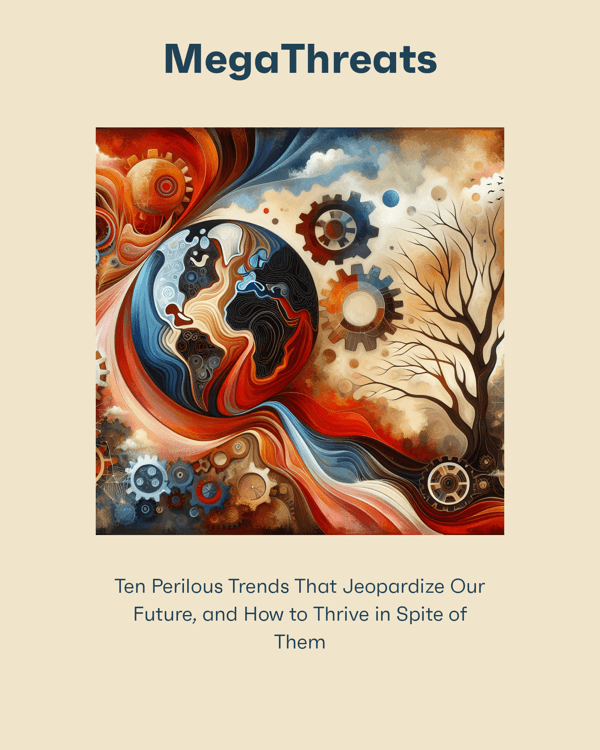
Nouriel Roubini is an economist best known for being one of the few people who correctly predicted the 2007-2009 Global Financial Crisis. He has authored the book Crisis Economics: A Crash Course in the Future of Finance and has published numerous papers on international macroeconomic issues.
The accelerating rise of AI-powered automation is reshaping the workforce, threatening jobs across industries and deepening economic inequality. Experts like Nouriel Roubini foresee widespread disruption, with prolonged unemployment and declining wages disproportionately affecting those unable to adapt to new technologies. Mustafa Suleyman warns that even high-skilled roles may not be immune as AI advances in generating human-like outputs. To navigate this shift, society must prioritize careers requiring human-centric skills or consider measures like universal basic income. Meanwhile, the global debt crisis continues to escalate, driven by outdated policies, risky monetary strategies, and unchecked borrowing, leaving economies increasingly fragile and vulnerable to systemic shocks. Aging populations further strain government budgets, with potential solutions like immigration and free trade facing resistance despite their necessity. Compounding these challenges, climate change exacerbates resource scarcity, disrupts agriculture, and triggers mass migrations, creating political and economic instability that demands urgent, comprehensive action. Central banks, acting as the economy’s “brain,” have expanded their roles through measures like quantitative easing, but outdated systems and growing inequality highlight the need for structural reform. Without bold, forward-thinking strategies, these interconnected crises risk spiraling into global instability.
Pour lire le reste du livre, téléchargez
Bitely







 8 min
8 min 5 Bite
 Aperçu
 5 Bites