Résumé du livre
Heinz Schilling is Professor Emeritus of History at Humboldt University in Berlin. Schilling’s work focuses on the history of religion, and he has published numerous academic works and award-winning popular histories. His book Martin Luther: Rebel in an Age of Upheaval is considered the gold standard of Luther biographies.
Luther’s sudden disappearance, orchestrated by his followers to hide him in Wartburg Castle, sparked widespread unrest as rumors of his death spread. Amid this turmoil, the Imperial Knights rebelled against the Roman Catholic Church and its allied political powers, but Luther, upon reemerging, distanced himself from their violent actions, emphasizing his commitment to peaceful spiritual reform. Nonetheless, the Reformation’s influence rippled across Germany, as townspeople and students began replacing Catholic priests with Lutheran leaders, often without bloodshed, while churches adopted German prayers and Luther’s Bible translation. These changes diminished clerical authority and elevated middle-class merchants and artisans, signaling a quiet social revolution. Meanwhile, Luther’s writings, including "On the Freedom of a Christian," gained widespread attention, challenging the Pope’s authority and leading to his excommunication. Despite efforts by Pope Leo X and Emperor Charles V to suppress him, Luther’s defiance at the Diet of Worms only amplified his influence. However, as Germany descended into chaos with the Peasants’ War, fueled by Thomas Müntzer’s radical calls for social equality through violence, Luther condemned the rebellion and sided with the nobility, urging them to crush the uprising. This stance alienated many commoners, but the Reformation’s profound impact on society endured.
Pour lire le reste du livre, téléchargez
Bitely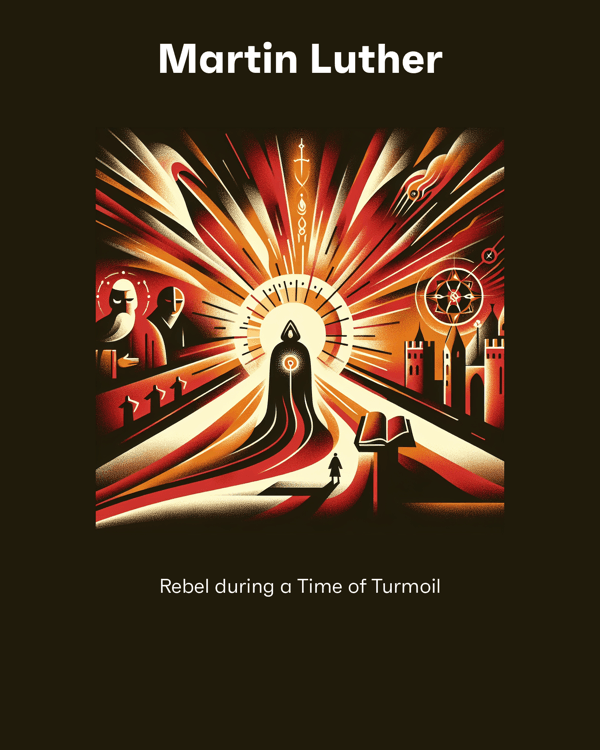

 20 min
 13 Bite
 Aperçu


 13 Bites