Self-Growth
GraspGrasp

Grasp

user-icon

Sanjay Sarma, Luke Yoquinto

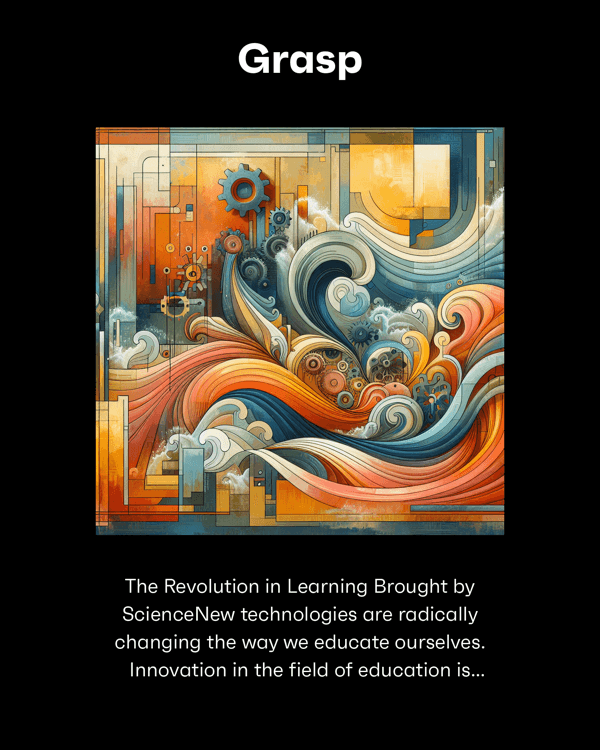
The journey from the seaside to the lecture hall mirrors the balance needed in education between exploration and structured learning. While creativity and curiosity ignite discovery, guidance is essential to connect and deepen knowledge. Current education systems often prioritize measurable outcomes over meaningful understanding, but innovative approaches like mastery learning at coding school "42" and MIT’s TEAL system demonstrate the potential to blend structure with adaptability. Curiosity, a natural driver of learning, has been championed by educators like John Dewey and embraced in Montessori methods, though scaling such approaches remains challenging. Effective education requires integrating theoretical knowledge with practical application, as seen in MIT’s Course 2.007. Yet, while technology offers opportunities to enhance learning, it must be used thoughtfully to avoid exacerbating inequities or over-surveillance. The time has come to rethink outdated practices, prioritize inclusivity, and embrace evidence-based strategies to ensure education equips all students with the tools to thrive in a complex world.

clock11 min
bite6 Bite
target Aperçu

De quoi s'agit-il ?

This book explores the intricate balance between creativity and structure in education, emphasizing how curiosity and guided learning can work together to foster deeper understanding. Through vivid storytelling and real-world examples, it examines the shortcomings of traditional systems while highlighting innovative approaches like mastery learning, discovery education, and hands-on applications. By weaving insights from cognitive science and progressive teaching methods, the narrative challenges outdated practices and advocates for a more inclusive, effective, and engaging educational framework. It’s a call to rethink how we learn, blending curiosity, technology, and practicality to unlock human potential.

Résumé du livre

Sanjay Sarma is the head of Open Learning at the Massachusetts Institute of Technology. He has spent years studying the science of learning as well as working as a professor of mechanical engineering. He is also the co-author of The Inversion Factor: How to Thrive in the IoT Economy.

The journey from the seaside to the lecture hall mirrors the balance needed in education between exploration and structured learning. While creativity and curiosity ignite discovery, guidance is essential to connect and deepen knowledge. Current education systems often prioritize measurable outcomes over meaningful understanding, but innovative approaches like mastery learning at coding school "42" and MIT’s TEAL system demonstrate the potential to blend structure with adaptability. Curiosity, a natural driver of learning, has been championed by educators like John Dewey and embraced in Montessori methods, though scaling such approaches remains challenging. Effective education requires integrating theoretical knowledge with practical application, as seen in MIT’s Course 2.007. Yet, while technology offers opportunities to enhance learning, it must be used thoughtfully to avoid exacerbating inequities or over-surveillance. The time has come to rethink outdated practices, prioritize inclusivity, and embrace evidence-based strategies to ensure education equips all students with the tools to thrive in a complex world.

Pour lire le reste du livre, téléchargez Bitely

appstoregoogleplayapp gallery
Toutes les bouchées
bite6 Bites

Rethinking Education: Bridging Knowledge and Application

1
logo

Transforming Learning Through Curiosity and Action

2
logo

Rethinking Learning: From Cramming to Retention

3
logo

Curiosity-Driven Learning: Bridging Wonder and Structure

4
logo

Reimagining Education: Blending Curiosity with Structure

5
logo

Revolutionizing Education: Bridging Knowledge and Application

6
logo

Livres associés

mailbox-icon

Voulez-vous continuer à apprendre ?

Ne manquez pas les mises à jour de l'univers passionnant de Bitely !