Résumé du livre
Jacob Mchangama is the founder and director of the Danish think tank Justitia and has won many awards for his work promoting free speech and human rights. He’s the host of the podcast Clear and Present Danger: A History of Free Speech, and he’s also published work on the subject of free speech for major publications including the Economist, the Washington Post, and Foreign Policy.
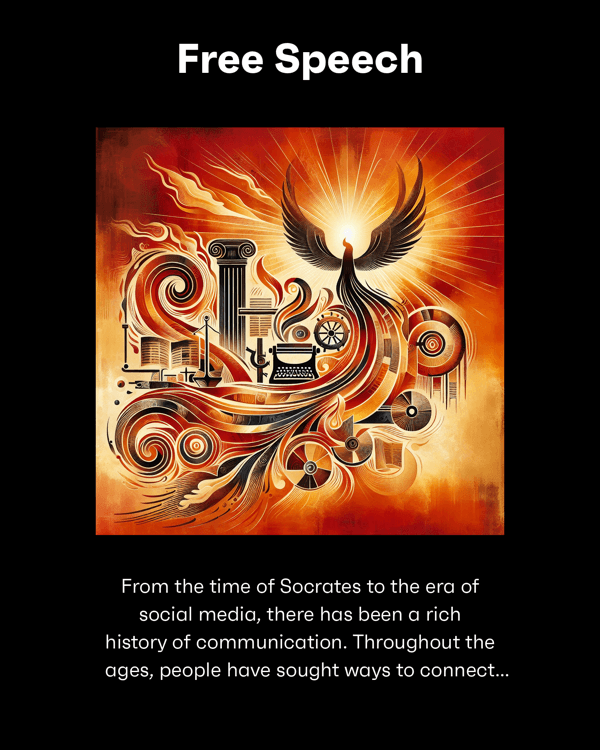
The ideals of free speech and democracy, once vibrant in ancient Athens, faded for nearly two millennia, suppressed by rigid orthodoxy and censorship, particularly during the medieval period. Despite this, the era saw intellectual advancements, such as the rise of universities, though the Catholic Church’s tolerance waned with the militant Inquisition. The printing press later disrupted this dominance, enabling both the spread of reformist ideas, like Martin Luther’s, and the paradoxical tendency to suppress dissenting views. History reveals a recurring struggle: while Athens championed free expression, even it silenced Socrates in fear of dissent. The Weimar Republic, a fleeting democratic experiment, similarly illustrates the dangers of censorship, as efforts to suppress radical ideologies like Nazism inadvertently fueled their rise. In contrast, the Dutch Republic’s decentralized governance fostered a haven for free thought, attracting figures like Spinoza, whose ideas helped shape the Enlightenment’s embrace of open dialogue and tolerance. These episodes underscore the fragile balance between safeguarding democracy and preserving free expression.
Pour lire le reste du livre, téléchargez
Bitely







 9 min
9 min 5 Bite
 Aperçu
 5 Bites