Economy & Finance
Empire of CottonEmpire of Cotton

Empire of Cotton

user-icon

Sven Beckert

The 20th century saw dramatic shifts in the cotton industry, driven by the rise of newly industrialized nations and the exploitation of low-wage labor in countries like China and India, where governments actively supported mill owners to suppress labor movements. While China’s mechanized production surged during World War I, Britain’s dominance waned due to rising wages and declining competitiveness. Historically, the demand for cotton had fueled global trade and exploitation, from the reliance on slave labor in the Americas to the deindustrialization of colonies like India under European powers. Mechanization revolutionized production, enabling industrialized nations to dominate global markets while devastating traditional industries. The cotton trade also fostered the rise of global capitalism, with merchants and brokers creating interconnected networks that laid the foundation for modern economies. However, this growth came at a human cost, from the brutal conditions of enslaved and factory laborers to the famines caused by colonial policies. By the 20th century, nations like Japan and Russia expanded cotton cultivation in their colonies, further reshaping the global landscape. Yet, the industry’s history of exploitation, inequality, and resilience continues to influence its trajectory, leaving its future uncertain.

clock18 min
bite9 Bite
target Aperçu

De quoi s'agit-il ?

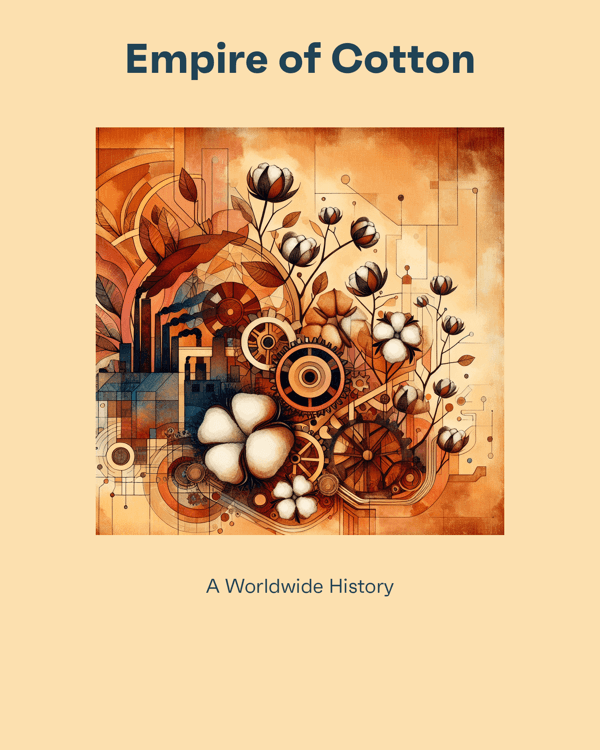
The story of cotton is one of transformation, exploitation, and global interconnectedness. Spanning centuries, it explores how this humble plant shaped economies, fueled industrial revolutions, and altered the lives of millions across continents. From the brutal realities of slavery and colonialism to the rise of mechanization and labor movements, the narrative delves into the profound impact of cotton on history, society, and the modern capitalist world. This is a tale of innovation, resilience, and the enduring complexities of a global industry.

Résumé du livre

Sven Beckert holds a PhD in History from Columbia University and is now Laird Bell Professor of American History at Harvard University. Empire of Cotton: A Global History won the 2015 Bancroft Prize and ranked as a finalist for the 2015 Pulitzer Prize for History.

The 20th century saw dramatic shifts in the cotton industry, driven by the rise of newly industrialized nations and the exploitation of low-wage labor in countries like China and India, where governments actively supported mill owners to suppress labor movements. While China’s mechanized production surged during World War I, Britain’s dominance waned due to rising wages and declining competitiveness. Historically, the demand for cotton had fueled global trade and exploitation, from the reliance on slave labor in the Americas to the deindustrialization of colonies like India under European powers. Mechanization revolutionized production, enabling industrialized nations to dominate global markets while devastating traditional industries. The cotton trade also fostered the rise of global capitalism, with merchants and brokers creating interconnected networks that laid the foundation for modern economies. However, this growth came at a human cost, from the brutal conditions of enslaved and factory laborers to the famines caused by colonial policies. By the 20th century, nations like Japan and Russia expanded cotton cultivation in their colonies, further reshaping the global landscape. Yet, the industry’s history of exploitation, inequality, and resilience continues to influence its trajectory, leaving its future uncertain.

Pour lire le reste du livre, téléchargez Bitely

appstoregoogleplayapp gallery
Toutes les bouchées
bite9 Bites

Global Threads: Cotton's Journey of Power

1
logo

Mechanization’s Global Impact on Cotton Dominance

2
logo

Empire of Cotton: Power, Labor, and Revolt

3
logo

Unseen Hands: The Hidden Cost of Cotton

4
logo

Global Networks That Revolutionized Cotton Trade

5
logo

Cotton Wars: Capitalism, Conflict, and Global Shifts

6
logo

Global Cotton's Shift: Labor, Land, and Power

7
logo

Colonial Cotton Empires: Exploitation and Collapse

8
logo

Global Cotton: Power Shifts and Labor Struggles

9
logo

Livres associés

mailbox-icon

Voulez-vous continuer à apprendre ?

Ne manquez pas les mises à jour de l'univers passionnant de Bitely !